Stainless Steel CNC Machining Services
CNC milling and turning support for custom stainless steel prototypes and production parts. Typical lead time is 5–10 business days, with expedited production as fast as 3 business days for eligible projects. Precision tolerances can reach ±0.001 in (±0.025 mm), subject to part geometry and drawing review.
What is stainless steel CNC machining?
Stainless steel CNC machining uses computer-controlled cutting tools to create accurate components from stainless bar, plate, tube, or other suitable stock. The material is selected for combinations of corrosion resistance, strength, hygiene, temperature performance, and appearance.
Because stainless steel grades can work-harden and retain heat at the cutting edge, successful machining depends on stable workholding, appropriate tooling, controlled feeds and speeds, coolant delivery, and planned chip evacuation.
- CNC milling for housings, brackets, manifolds, plates, and complex profiles
- CNC turning for shafts, pins, sleeves, fittings, and threaded components
- DFM review for thin walls, deep pockets, small holes, and critical tolerances
Why engineers choose stainless steel
Stainless steel supports demanding parts where durability, corrosion behavior, cleaning, strength, or a premium metal finish matters.
Corrosion resistance
Suitable grades can perform well in moisture, chemical, food-contact, and outdoor environments.
Strength and durability
Many stainless grades provide useful strength, wear resistance, and long service life.
Cleanable surfaces
Smooth, properly finished surfaces suit equipment that requires routine cleaning or hygiene controls.
Grade flexibility
Austenitic, martensitic, ferritic, precipitation-hardening, and duplex families address different priorities.
Stainless steel CNC machining services
The right process depends on stock form, feature access, tolerances, surface requirements, quantity, and the selected grade.
CNC Milling
Pockets, contours, bores, slots, mounting patterns, and multi-face geometry.
CNC Turning
Shafts, fittings, sleeves, pins, threads, tapers, and controlled concentric features.
Multi-Axis Machining
Additional-axis machining can reduce setups and support complex feature relationships.
Drilling & Tapping
Ports, bores, and threads planned around tool access, heat, chips, and burr control.
| Buyer Reference | Standard Capability | Higher-Priority Option |
|---|---|---|
| Linear tolerance | ±0.005 in (±0.127 mm) | Precision CNC to ±0.001 in (±0.025 mm) |
| Swiss machining tolerance | Application-dependent | As tight as ±0.0002 in (±0.005 mm) |
| Lead time | Typically 5–10 business days | As fast as 3 business days for eligible projects |
Common stainless steel grades for CNC machining
Properties and machinability vary with composition, heat treatment, stock form, and specification. Confirm the exact grade and condition on the drawing.
| Grade | Typical Selection Reason | Machining Consideration | Example Uses |
|---|---|---|---|
| 303 | Improved machinability among common austenitic grades | Lower corrosion resistance than 304 in some environments | Fittings, fasteners, shafts, instrument parts |
| 304 / 304L | General corrosion resistance and broad availability | Work-hardening and heat control require planning | Housings, brackets, food equipment, general hardware |
| 316 / 316L | Enhanced resistance in marine or chemical environments | Can be more demanding to machine than 303 | Fluid systems, medical components, marine hardware |
| 410 / 416 | Martensitic strength; 416 offers improved machinability | Heat treatment and corrosion needs should be specified | Valves, shafts, wear components, fasteners |
| 17-4 PH | High strength with useful corrosion resistance | Condition and heat treatment affect machining strategy | Aerospace, energy, tooling, structural components |
| Duplex 2205 | Strength and chloride stress-corrosion resistance | Requires robust tooling and controlled cutting parameters | Marine, chemical, and process equipment |
Design guidelines for stainless steel machined parts
Use practical corner radii
Larger internal radii allow stronger tools and can reduce unnecessary machining time.
Identify critical tolerances
Apply close tolerances to functional interfaces and clearly define datums and inspection priorities.
Review thin walls
Increase support or wall thickness where possible to control vibration and distortion.
Plan deep features
Deep pockets and holes need space for tool reach, coolant, and chip evacuation.
Specify edge requirements
Mark sealing faces, thread starts, sharp-edge exceptions, and controlled break edges.
Share assembly context
Explain mating parts, loads, fluids, temperature, and service environment during DFM review.
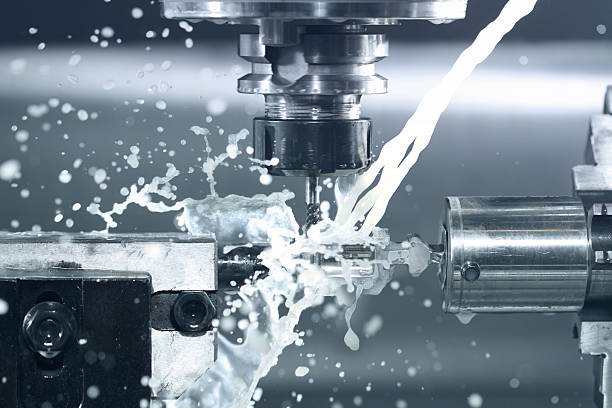
Managing heat, work hardening, and tool wear
Stainless steel is less forgiving than many free-machining materials. Rubbing, interrupted cuts, poor chip evacuation, or insufficient rigidity can shorten tool life and affect finish.
- Maintain positive cutting action and avoid unnecessary dwell
- Use rigid workholding and suitable tool geometry
- Control heat with appropriate coolant and cutting parameters
- Plan chip breaking, deburring, and inspection around the grade
Surface finishes for stainless steel parts
Finishing should match corrosion, hygiene, appearance, friction, dimensional, and assembly requirements.
As Machined
Visible tool marks remain; suitable for many functional or hidden surfaces.
Passivation
A specified chemical treatment can support restoration of the passive surface after machining.
Electropolishing
Can smooth and brighten selected surfaces where the process suits the grade and geometry.
Bead Blasting & Polishing
Used for controlled appearance or texture; functional surfaces and finish direction should be defined.
Applications for CNC machined stainless steel components
Medical & Laboratory
Instrument components, equipment hardware, fixtures, housings, and fluid-handling parts.
Food & Packaging
Washdown hardware, guides, fittings, nozzles, and machine components.
Aerospace & Robotics
Brackets, shafts, fasteners, structural hardware, and motion-system parts.
Marine & Industrial
Valves, fittings, pumps, sensor housings, tooling, and process equipment.
From CAD file to finished stainless steel parts
A structured review aligns grade, condition, tolerances, finish, inspection, and quantity before machining.
Stainless steel CNC machining FAQs
What tolerances can you achieve on stainless steel parts?
Standard CNC machining tolerance is ±0.005 in (±0.127 mm). Precision CNC features can reach ±0.001 in (±0.025 mm), while suitable Swiss-machined features can reach ±0.0002 in (±0.005 mm). Achievable tolerance depends on the grade, geometry, feature size, datum scheme, finish, and inspection plan, so the drawing must be reviewed before confirmation.
What is the typical lead time?
Typical lead time is 5–10 business days. Expedited production can be as fast as 3 business days for eligible projects. The confirmed schedule depends on complexity, quantity, material availability, finishing, inspection requirements, and the current production schedule.
Which stainless steel grade is easiest to machine?
303 and 416 are commonly considered when machinability is a priority, but corrosion, strength, temperature, weldability, and regulatory requirements must also guide selection.
What files should I send for a quote?
Send a suitable 3D CAD file plus a PDF drawing identifying the grade and condition, quantity, critical tolerances, threads, finish, and inspection requirements.
Can 304 and 316 stainless steel be CNC machined?
Yes. Both are widely machined, but their work-hardening behavior requires suitable tools, stable cutting conditions, coolant, chip control, and rigid workholding.
Can machined stainless steel parts be passivated?
Passivation is commonly specified after machining. The grade, applicable standard, surface preparation, testing, and protected dimensions should be defined before production.
How can machining cost be reduced?
Use practical internal radii, avoid unnecessary deep features, apply close tolerances only to functional areas, and share realistic finish and inspection requirements.
Ready to quote your custom stainless steel parts?
Upload the CAD model and drawing with grade, condition, quantity, critical tolerances, finish, and inspection requirements.
Explore our CNC machining services, compare brass machining and copper machining, or contact our team.