Delrin CNC Machining Services
Custom CNC milling, turning, drilling, and secondary operations for prototypes and production Delrin machined parts. Eligible critical features can reach tolerances as tight as ±0.05 mm, with prototype lead times from 3–5 business days after drawing, material, quantity, finish, and inspection review.
What is Delrin CNC machining?
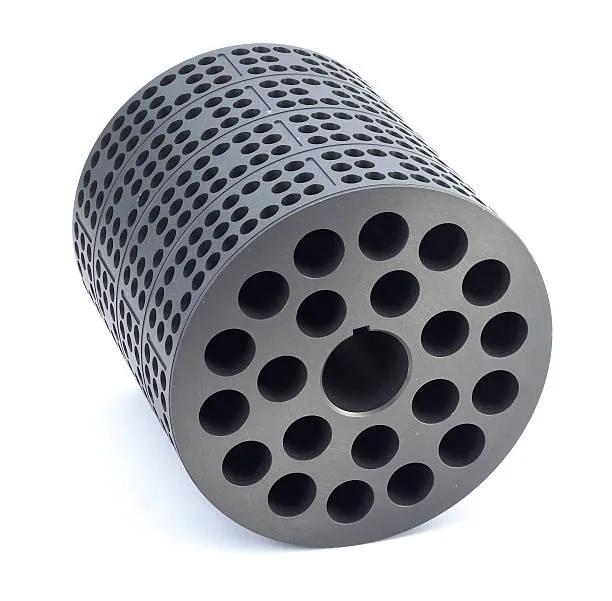
Delrin® is a branded acetal homopolymer, also called POM-H. Delrin CNC machining removes material from extruded rod, plate, or other approved stock to manufacture accurate components without the tooling investment required for molding. It is widely considered for gears, bushings, rollers, valve components, electrical insulators, fixtures, and other low-friction mechanical parts.
Delrin combines strength, stiffness, fatigue performance, low moisture pickup, dimensional stability, and natural lubricity. These characteristics support precise features and sliding interfaces, but heat, internal stock stress, clamping force, and sharp corners still require careful process planning.
Quick answer for buyers
Delrin machined parts are CNC-produced components made from Delrin acetal homopolymer (POM-H). The material is selected when a design needs low friction, good wear resistance, stiffness, fatigue resistance, and stable dimensions with less moisture sensitivity than nylon.
- Suitable for precision milling and turning
- Available in natural, black, and application-specific grades
- Good for moving, bearing, wear, and electrical components
- Material certificates and grade-specific compliance available by request
CNC processes for Delrin machined parts
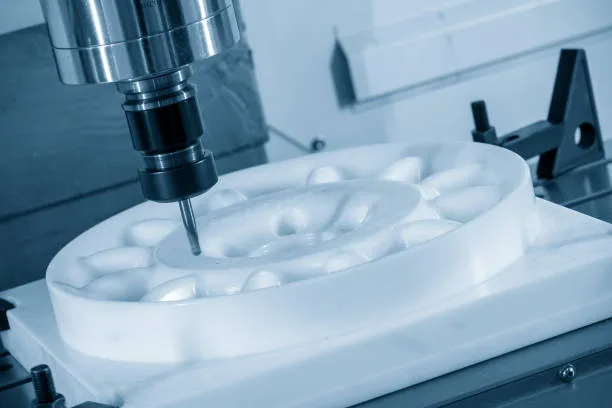
Tooling, workholding, roughing, finishing, and inspection are selected around the stock condition and the function of each dimension.
CNC Milling
Pockets, slots, bores, profiles, hole patterns, sealing faces, and multi-axis features in Delrin plate or block.
CNC Turning
Bushings, rollers, sleeves, rings, gears, spacers, threaded parts, and stepped diameters from rod stock.
Drilling & Threading
Holes, tapped features, counterbores, and inserts planned for engagement length, assembly cycles, and pull-out load.
Secondary Operations
Deburring, marking, polishing trials, threaded inserts, dimensional reports, and assembly when specified.
Delrin properties that matter in CNC machining
Values vary by exact grade, color, additives, stock supplier, temperature, and test method. The approved material datasheet and customer drawing govern production.
| Material Characteristic | Design or Machining Relevance | Buyer Check |
|---|---|---|
| Acetal homopolymer (POM-H) | High crystallinity supports stiffness, strength, and fatigue performance | Specify true Delrin® or acceptable equivalent explicitly |
| Low friction and good wear behavior | Useful for gears, bushings, guides, rollers, and moving interfaces | Define mating material, load, speed, lubrication, and service life |
| Low moisture absorption | Dimensions are generally less humidity-sensitive than nylon | State operating temperature and wet/dry exposure |
| Good dimensional stability | Supports precision components when stress and heat are controlled | Identify critical datums, fits, and inspection temperature |
| Electrical insulation | Useful for supports, spacers, housings, and isolating components | Provide voltage, safety, flammability, and certification needs |
| Grade-dependent temperature range | Performance changes with continuous load and temperature | Use the selected grade datasheet for final design limits |
Choosing Delrin grade and stock
Natural Delrin
Common for general mechanical components and projects where the natural white color is acceptable.
Black Delrin
Selected for appearance, light control, or grade-specific performance. Confirm exact grade rather than choosing by color alone.
Modified Delrin Grades
Low-friction, enhanced-wear, antistatic, UV-stabilized, reinforced, food-contact, medical, and other variants may be available with documentation.
How we manage heat, stress, burrs, and chip control
Heat Build-Up
Sharp polished tools, adequate feed, chip evacuation, controlled engagement, and light finishing passes reduce rubbing and dimensional drift.
Internal Stock Stress
Balanced stock removal, staged roughing and finishing, stabilization time, and annealing review can help demanding or asymmetric parts.
Clamping Distortion
Broad support and low-stress fixturing help prevent a flexible part from measuring differently after release.
Chips and Re-Cutting
Open flute geometry and reliable air or compatible coolant keep chips away from the cutting edge and finished surface.
Burrs and Edge Quality
Supported exits, sharp tools, controlled deburring, and drawing-defined edge breaks protect sealing and mating features.
Threads and Inserts
Generous engagement and metal inserts may improve repeated assembly, torque capacity, or pull-out performance.
Delrin machining tolerances and lead times
Use practical tolerances on non-critical geometry and reserve tighter controls for bearing fits, sealing faces, datums, hole patterns, and assembly interfaces.
| Planning Level | Linear Tolerance Reference | Typical Control |
|---|---|---|
| Standard features | About ±0.20 mm | Normal CNC setup, deburring, and inspection |
| Precision features | About ±0.10 mm | Stable stock, controlled fixturing, finishing pass, defined datums |
| Eligible critical features | As tight as ±0.05 mm | Drawing review, stress/thermal control, feature-specific inspection plan |
Common applications for Delrin machined parts
Gears & Motion
Spur gears, timing components, racks, pulleys, rollers, wear pads, guides, and sliding mechanisms.
Bushings & Bearings
Low-friction sleeves, spacers, thrust washers, and bearing components sized for the actual load and speed.
Fluid Handling
Valve bodies, manifolds, seats, impellers, fittings, and seals where chemical and temperature compatibility are verified.
Electrical Equipment
Insulators, terminal supports, spacers, fixtures, housings, and mechanically loaded electrical components.
Automation
Nests, guides, grippers, conveyor components, sensor mounts, jigs, and replacement machine parts.
Automotive
Prototype and production mechanisms, clips, guides, and wear components subject to grade and validation requirements.
Food & Medical
Components machined from specifically documented compliant grades; regulatory status is never inferred from color.
Product Development
Functional prototypes, test parts, bridge production, and design iterations before tooling investment.
DFM guidelines for CNC machined Delrin
Wall Thickness
Avoid unsupported thin walls and large flat areas that can flex under cutting or clamping forces.
Internal Corners
Add practical radii so larger, more rigid tools can be used and stress concentrations are reduced.
Fits and Datums
Define functional datums, mating conditions, inspection temperature, and feature-specific tolerances.
Threads
Use suitable thread engagement and consider inserts for repeated assembly, high torque, or repairability.
Finishing options for Delrin CNC parts
As Machined
Functional machined surfaces with tool marks and drawing-defined deburring or edge breaks.
Fine Machined
Controlled finishing passes for improved sealing, bearing, sliding, or appearance requirements.
Mechanical Polishing
Selected cosmetic surfaces can be evaluated for polishing, with geometry and grade limitations reviewed first.
Laser Marking
Part numbers, orientation marks, and traceability may be reviewed with a sample or contrast requirement.
Threaded Inserts
Press-fit, heat-set, or mechanically retained insert approaches are selected for the part and assembly load.
Assembly & Inspection
Hardware installation, subassembly, first-article inspection, dimensional reports, and certificates by RFQ.
Delrin vs. acetal copolymer, nylon, and HDPE
| Material | Key Strength | Main Buyer Consideration |
|---|---|---|
| Delrin / POM-H | High stiffness, strength, fatigue resistance, low friction, and dimensional stability | Specify branded grade if required; manage stock stress and thermal expansion |
| Acetal copolymer / POM-C | Good machinability, chemical resistance, and centerline-porosity advantages in some stock | Not identical to Delrin; approve substitutions based on function and datasheet |
| Nylon | Toughness, wear performance, and broad grade availability | Higher moisture sensitivity can influence dimensions and properties |
| HDPE | Chemical resistance, impact performance, low cost, and low density | Lower stiffness and more movement can make close tolerances harder |
| ABS | Economical prototypes, impact resistance, and easy finishing | Usually less suitable for precision wear and low-friction mechanisms |
Delrin CNC machining FAQs
What are Delrin machined parts?
They are components CNC machined from Delrin acetal homopolymer (POM-H) stock. Common examples include gears, bushings, rollers, spacers, valve components, electrical insulators, fixtures, and precision mechanical parts.
Is Delrin the same as acetal?
Delrin is a branded acetal homopolymer, or POM-H. “Acetal” is a broader material family that also includes acetal copolymer, or POM-C. They share useful properties but are not automatically interchangeable.
How tight can Delrin machining tolerances be?
Standard features may be planned around ±0.20 mm, precision features around ±0.10 mm, and eligible critical features as tight as ±0.05 mm. Geometry, stock condition, wall thickness, temperature, and inspection method determine the confirmed capability.
What is the lead time for Delrin CNC parts?
Eligible prototypes may start from 3–5 business days after approval. The confirmed schedule depends on grade and stock availability, quantity, geometry, tolerances, finishing, certificates, inspection, packaging, and destination.
Why is Delrin used for gears and bushings?
Its combination of low friction, wear performance, stiffness, fatigue resistance, and low moisture absorption can suit moving interfaces. Final suitability still depends on load, speed, temperature, mating material, lubrication, and service life.
Can you machine black and natural Delrin?
Yes, subject to exact grade and stock availability. Color alone does not identify a resin grade, so include the manufacturer/grade, color, certificate, compliance, and substitution rules in the RFQ.
Can Delrin parts be painted or bonded?
It can be difficult because Delrin has low surface energy. Surface preparation, adhesive selection, joint design, and testing are needed; mechanical fastening or inserts may be more dependable for some assemblies.
What files should I send for a quote?
Send a STEP or IGES model and a PDF drawing showing grade, color, quantity, datums, critical tolerances, threads or inserts, surface requirements, inspection, certificates, and requested delivery date.
Ready to quote Delrin machined parts?
Upload your CAD model and drawing with the Delrin grade, color, quantity, critical tolerances, finish, inspection, certificates, and requested delivery date.
Explore our CNC machining services, compare acrylic CNC machining, ABS CNC machining, and HDPE machining, or contact our team.