Machining HDPE: CNC HDPE Machining Services
Custom CNC milling, turning, routing, drilling, and secondary operations for HDPE prototypes and production parts. Eligible critical features can reach tolerances as tight as ±0.05 mm, with prototype lead times from 3–5 business days after drawing, grade, quantity, finish, and inspection review.
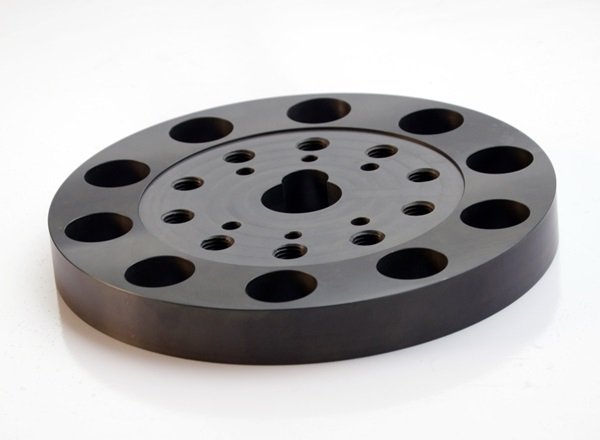
What is HDPE CNC machining?
High-density polyethylene (HDPE) is a semi-crystalline thermoplastic valued for chemical resistance, low moisture absorption, impact performance, electrical insulation, and a favorable strength-to-weight ratio. CNC machining removes material from HDPE sheet, plate, rod, or tube to create prototypes, fixtures, guards, guides, housings, rollers, and custom functional components.
HDPE machines quickly, but it behaves differently from metal. Heat can soften the cutting zone, long chips can re-wrap around tools, and internal stress or clamping pressure can move dimensions after machining. Stable results depend on sharp plastic-cutting tools, chip evacuation, controlled workholding, staged roughing and finishing, and inspection at a defined temperature.
Why engineers choose machined HDPE
- Strong resistance to many chemicals and moisture
- Low density for lightweight components
- Good impact performance and electrical insulation
- Efficient machining for prototypes and repeat production
- Natural, black, UV-stabilized, and application-specific grades
- Weldable and compatible with selected inserts and secondary operations
CNC processes for machining HDPE
We select tooling, fixturing, chip control, and finishing strategy around the HDPE grade and the functional dimensions on your drawing.
CNC Milling
Faces, pockets, slots, contours, bores, counterbores, mounting patterns, and multi-axis features in plate or block stock.
CNC Turning
Bushings, spacers, sleeves, rollers, rings, threaded components, and stepped diameters from rod or tube.
CNC Routing
Efficient profiling, cutouts, grooves, and large-format features in HDPE sheet with controlled chip evacuation.
Drilling & Threading
Holes, taps, inserts, and assembly features designed to manage pull-out strength and local material deformation.
Typical HDPE properties relevant to machining
The ranges below are planning references for standard HDPE. Confirm the selected grade and supplier data before final design approval.
| Property | Typical Reference Range | Machining Relevance |
|---|---|---|
| Density | 0.93–0.97 g/cm³ | Lightweight parts and low inertial mass |
| Tensile Strength | Approximately 20–37 MPa | Influences load, thread, and thin-wall decisions |
| Hardness | About Shore D 60–65 | Sharp tools and low-friction cutting edges are preferred |
| Melting Range | Approximately 120–140°C | Heat control prevents smearing and chip re-welding |
| Thermal Expansion | Approximately 100–200 µm/m·K | Temperature affects precision dimensions |
| Moisture Absorption | Typically very low | Useful for wet and humid operating conditions |
Selecting the right HDPE grade
Standard Natural or Black HDPE
Economical general-purpose stock for fixtures, guards, guides, containers, and industrial components.
UV-Stabilized HDPE
Selected for outdoor and marine exposure where weathering and color retention matter.
Application-Specific HDPE
Food-contact, antistatic, conductive, flame-retardant, or other documented grades when the application requires them.
Starting-point cutting parameters for HDPE
Exact speeds and feeds depend on tool diameter, flute geometry, grade, stock condition, machine rigidity, workholding, coolant strategy, and the required finish. These ranges are starting references—not fixed production settings.
| Operation | Typical Starting Range | Preferred Tooling | Primary Control |
|---|---|---|---|
| Milling Roughing | 8,000–15,000 rpm; 2,500–6,000 mm/min feed | 1–2 flute polished carbide | Thick chips and strong evacuation |
| Milling Finishing | 12,000–18,000 rpm; 1,300–2,500 mm/min feed | Sharp 2-flute carbide | Light finish pass and minimal heat |
| Turning | Positive-rake tool; feed set by diameter and finish | Sharp polished carbide insert | Continuous chip control and low clamping stress |
| Routing Sheet | 12,000–24,000 rpm; grade and thickness dependent | O-flute or 2-flute upcut tool | Chip clearance and sheet support |
| Drilling | Peck cycle selected by hole depth and diameter | Sharp polished drill | Prevent rubbing, heat, and chip packing |
Managing heat, chips, movement, and threads
Heat Build-Up
Sharp tools, adequate feed, air or compatible coolant, and continuous tool motion reduce melting and smeared surfaces.
Long Stringy Chips
Open flute geometry, air blast, pecking, and planned chip breaks prevent chip wrapping and re-cutting.
Dimensional Movement
Balanced stock removal, low-stress fixturing, staged roughing and finishing, and thermal stabilization improve repeatability.
Static Build-Up
Grounding, extraction, and chip management keep lightweight swarf away from sensors and cutting zones.
Thread Strength
Coarse threads, generous engagement, and metal inserts may be preferable for repeated assembly or higher loads.
Burrs & Finish
Polished cutting edges, supported exits, and controlled deburring protect cosmetic and sealing surfaces.
HDPE machining tolerances and lead times
Use wider tolerances for non-critical features and reserve precision controls for interfaces, seals, bearing fits, hole patterns, and assembly datums.
| Planning Level | Linear Tolerance Reference | Typical Requirements |
|---|---|---|
| Standard | About ±0.25 mm | Normal CNC setup and inspection |
| Precision | About ±0.13 mm | Sharp tooling, controlled fixturing, stable stock |
| Eligible Critical Features | As tight as ±0.05 mm | Drawing review, thermal control, stress management, defined inspection |
Where CNC machined HDPE parts are used
Industrial Equipment
Wear strips, guides, guards, fixtures, spacers, rollers, and handling components.
Chemical Handling
Manifolds, tank accessories, supports, covers, and components selected for compatible environments.
Marine & Outdoor
Mounts, brackets, guides, panels, and fittings made from suitable UV-stabilized grades.
Food Equipment
Guides, cutting surfaces, spacers, and machine components when a documented food-contact grade is specified.
Medical & Laboratory
Fixtures, trays, housings, and non-implant components subject to material and cleaning requirements.
Electrical Systems
Insulating mounts, covers, supports, and custom barriers.
Water & Agriculture
Flow-handling parts, guides, wear components, and weather-resistant equipment parts.
Product Development
Functional prototypes, ergonomic mockups, test fixtures, and bridge production components.
DFM guidelines for machining HDPE
Wall Thickness
Avoid large thin walls that can deflect during cutting or move after unclamping. Add ribs or local thickness where practical.
Internal Radii
Use radii that allow practical tool diameters and reduce heat, dwell, and sharp stress concentrations.
Datums & Tolerances
Define functional datums and apply tight tolerances only to features that control fit or performance.
Threads & Inserts
Provide sufficient engagement and consider inserts for repeated assembly, torque, or pull-out loads.
Finishes and assembly options for machined HDPE
As Machined
Visible tool marks with functional edges and drawing-defined deburring.
Fine Machined
Light finishing passes for sealing faces, sliding surfaces, or improved appearance.
Bead Blasting
A uniform matte texture may be evaluated on suitable geometry and approved sample expectations.
Polishing
Mechanical finishing can improve selected cosmetic surfaces, subject to grade and geometry.
Plastic Welding
Hot-gas, extrusion, or fusion methods may join compatible HDPE components.
Inserts & Assembly
Threaded inserts, fasteners, bonding trials, marking, and subassembly can be reviewed with the application.
HDPE vs. UHMW-PE, LDPE, and polypropylene
| Material | Relative Stiffness | Machining Behavior | Common Selection Reason |
|---|---|---|---|
| HDPE | Higher than LDPE | Efficient machining and good dimensional control with heat management | Balanced cost, chemical resistance, strength, and machinability |
| UHMW-PE | Moderate | Very stringy chips; usually slower to machine | Exceptional wear and low-friction performance |
| LDPE | Low | More flexible and harder to hold precisely | Flexibility and soft compliant behavior |
| Polypropylene | Grade dependent | Good machinability with similar heat-control needs | Chemical resistance, lower density, and application-specific compatibility |
Machining HDPE FAQs
Can HDPE be CNC machined to tight tolerances?
Yes. Standard features are commonly planned around ±0.25 mm, while eligible critical features may reach ±0.05 mm with suitable stock, geometry, stress management, temperature control, fixturing, and inspection. Final capability is confirmed after drawing review.
What is the lead time for CNC machined HDPE parts?
Eligible prototypes may start from 3–5 business days after order approval. The confirmed schedule depends on stock availability, quantity, size, geometry, annealing, finishing, documentation, inspection, packaging, and current capacity.
How do you prevent HDPE from melting during machining?
We use sharp tools, adequate feed, open flute geometry, chip evacuation, air or compatible cooling, shallow finish passes, and continuous tool motion. The strategy is adjusted to the grade, tool diameter, and machine.
Which tools work best for machining HDPE?
Sharp polished carbide tools with one or two flutes and positive rake geometry are common choices. O-flute tools can help routing applications. Tool selection depends on the operation, feature, finish, and machine.
Is HDPE suitable for food-contact parts?
Documented food-contact HDPE grades are available, but not every HDPE sheet or rod has the same approval. Specify the required regulation, certificate, traceability, and acceptable machining fluid on the RFQ.
What is the difference between HDPE and UHMW-PE?
HDPE generally machines faster and holds precision dimensions more easily. UHMW-PE is often selected for superior abrasion resistance and low friction but can produce more difficult stringy chips.
Should HDPE be annealed before machining?
Annealing may help precision or highly unbalanced parts by reducing internal stress. Whether it is required depends on stock condition, geometry, wall thickness, tolerance, and supplier guidance.
What files should I send for a quote?
Send a STEP or IGES model plus a PDF drawing showing HDPE grade, color, quantity, critical dimensions and datums, threads or inserts, finish, inspection requirements, certificates, and requested delivery date.
Ready to quote CNC machined HDPE parts?
Upload your CAD model and drawing with grade, color, quantity, critical tolerances, finish, inspection, documentation, and requested delivery date.
Explore our CNC machining services, compare acrylic CNC machining and ABS CNC machining, or contact our team.