CNC Machining for Robotics & Automation
Precision custom parts for robotic systems, automated production lines, machine builders and equipment integrators—from first functional prototype to repeatable production and MRO replacement parts.
What is CNC machining for automation?
Automation components rarely work alone. Hole patterns must align, bearing seats must hold their fit, datums must transfer across an assembly and mating surfaces must remain stable after finishing. Our team reviews the drawing, material, critical-to-quality features and assembly function before selecting the machining and inspection plan.
Best Machining supports automation OEMs, robotic integrators, fixture designers and maintenance teams with precision CNC machining, fabrication, prototyping, finishing and inspection from one manufacturing source.
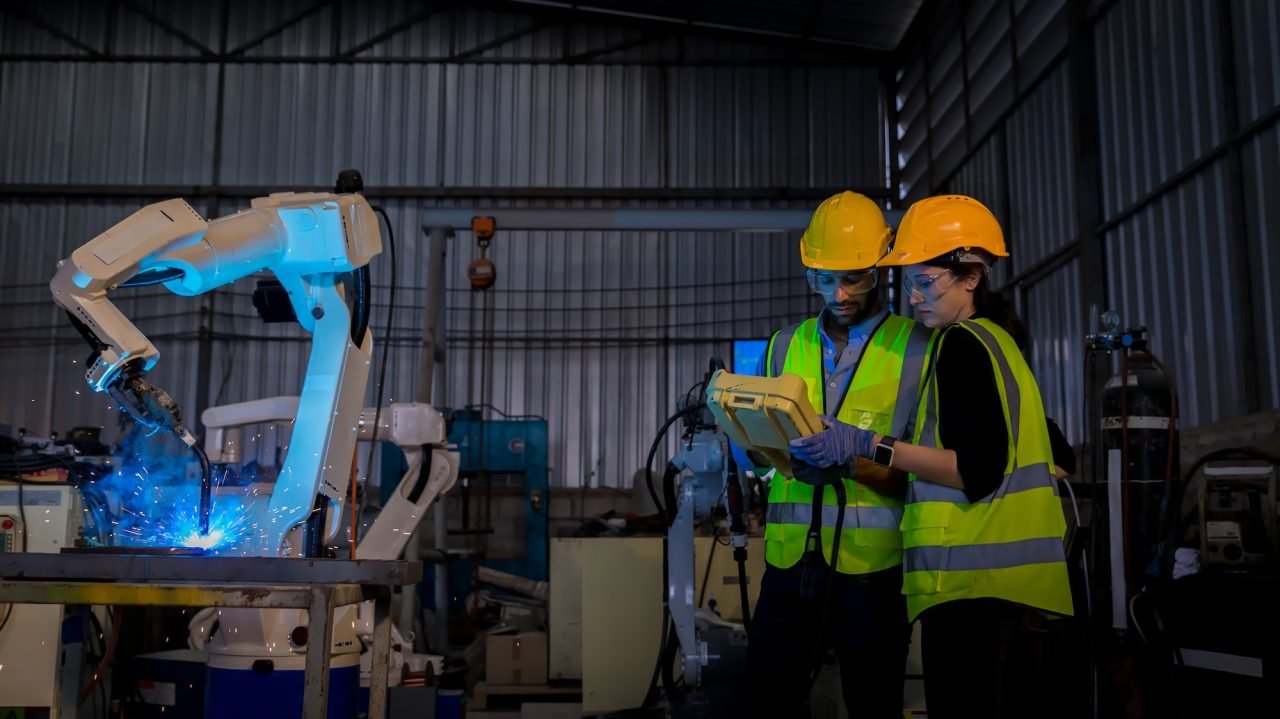
Typical CNC-machined automation components
We manufacture custom components from customer CAD models and drawings. The following groups represent common RFQs rather than an off-the-shelf catalog.
EOAT & Gripper Components
End-of-arm tooling adapter plates, gripper fingers, jaw inserts, tool-changer interfaces and lightweight robot wrist brackets.
Fixtures & Workholding
Datum plates, nest fixtures, inspection fixtures, locating blocks, pallet tooling, soft jaws and repeatable changeover hardware.
Motion-System Parts
Actuator housings, motor mounts, bearing blocks, couplings, shafts, spacers, guide plates and gearbox interface components.
Machine-Vision Hardware
Camera mounts, lens brackets, sensor holders, lighting supports, calibration targets and adjustable optical assemblies.
Frames, Guards & Panels
Machined base plates, fabricated frames, safety-guard brackets, equipment panels, cable-management parts and access covers.
Pneumatic & Fluid Parts
Manifold blocks, valve mounting plates, vacuum tooling, air passages, threaded ports and sealed actuator components.
Electronics Enclosures
Controller housings, heat sinks, connector panels, servo-drive brackets and protected sensor or edge-computing enclosures.
MRO Replacement Parts
Drawing-based replacement components for legacy equipment, line recovery, preventive maintenance and controlled spare-part inventories.
Manufacturing services for automation equipment
Choose one process or combine several for assemblies that include precision components, sheet-metal structures, printed prototypes and production-ready finishes.
3-, 4- & 5-Axis CNC Milling
For complex housings, fixture plates, gripper bodies, pockets, multi-face features and accurate datum relationships.
CNC Turning
For shafts, pins, bushings, rollers, threaded adapters, couplings and concentric motion components.
Sheet Metal Fabrication
For equipment panels, guards, frames, brackets, weldments and fabricated automation structures.
Rapid Prototyping
Functional metal and plastic parts for design verification, assembly testing, pilot cells and engineering iterations.
Plastic & Metal 3D Printing
Fast geometry validation, ducts, covers, lightweight tooling and complex low-volume components.
Surface Finishing
Anodizing, bead blasting, powder coating, black oxide and other finishing options selected for wear, corrosion and appearance.
Inspection & Documentation
Dimensional inspection plans focused on datums, fits, hole patterns and other CTQ features identified on the drawing.
Repeat Production Support
Revision-controlled repeat orders, process consistency and scalable sourcing for machine builders and automation OEMs.
Materials for robotics and automation parts
Material selection should reflect load, stiffness, mass, wear, chemical exposure, electrical behavior, operating temperature and finish—not simply machinability.
| Material family | Common grades | Why automation engineers use it | Typical components |
|---|---|---|---|
| Aluminum | 6061, 6082, 7075 | Low mass, high machinability, good stiffness-to-weight ratio and broad anodizing options. | Robot brackets, EOAT plates, housings, fixtures, camera mounts. |
| Stainless steel | 303, 304, 316, 17-4 PH | Corrosion resistance, strength and suitability for clean, wet or demanding environments. | Shafts, pins, gripper parts, washdown equipment, precision interfaces. |
| Carbon & alloy steel | 1018, 1045, 4140, tool steels | Strength, wear resistance and rigidity for loaded tooling and motion hardware. | Fixture bases, wear plates, shafts, locating elements, machine components. |
| Brass & copper | Common machinable grades | Electrical or thermal conductivity and useful bearing or wear behavior in selected designs. | Contacts, heat-transfer parts, bushings, pneumatic or fluid fittings. |
| Engineering plastics | Delrin/POM, Nylon, PC, PTFE, PEEK | Low friction, electrical insulation, chemical resistance, lower mass and reduced part marking. | Guide blocks, wear pads, soft gripper fingers, insulators, covers, rollers. |
Grade availability and final capability depend on part geometry, quantity, certification requirements and finishing specifications.
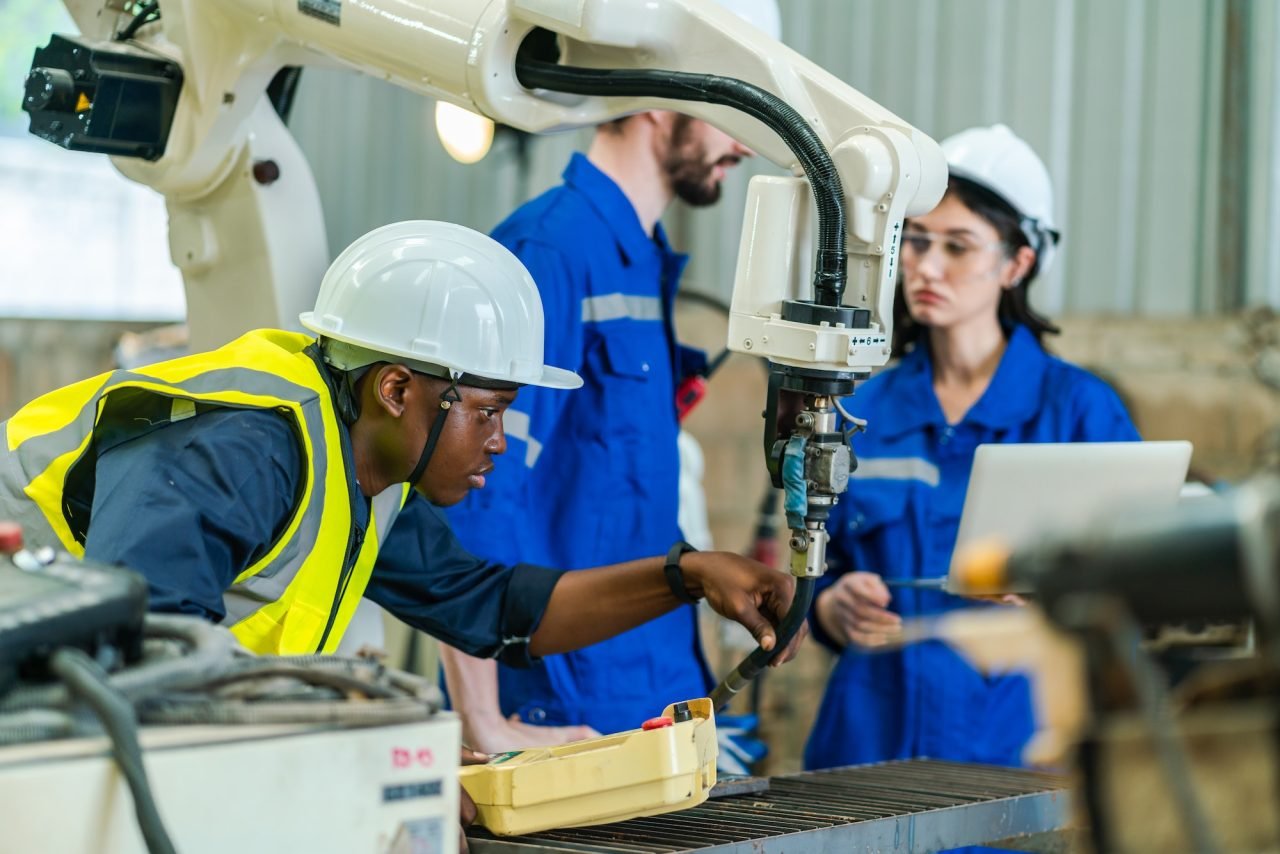
Control the features that make the assembly work
Automation assemblies depend on repeatable relationships between datums, holes, bearings, actuators and sensors. We recommend placing the tightest tolerances only on function-critical features and defining the datum reference frame that controls assembly.
- Bearing and bushing seats
- Dowel-pin and locating-hole positions
- Flatness of fixture and mounting faces
- Perpendicularity of motion interfaces
- Concentricity of shafts and bores
- True position of repeated hole patterns
- Surface finish on sliding or sealing areas
- Post-finish dimensions and masking zones
Best Machining can achieve tolerances as tight as ±0.001 mm on qualified critical features. Actual tolerance capability must be confirmed against material, size, geometry, wall thickness, setup access and inspection method.
Automation and robotics applications
Industrial Robots & Cobots
Arm brackets, wrist adapters, joint housings, lightweight links, tool changers and safety-system mounts.
Packaging Automation
Change parts, guide rails, star wheels, vacuum tooling, sensor mounts and washdown-compatible components.
Machine Vision & Inspection
Rigid camera mounts, lighting brackets, calibration fixtures, optical plates and guarded sensor enclosures.
Electronics Assembly
Precision nests, pick-and-place tooling, test fixtures, alignment hardware and ESD-conscious material options.
Automotive Production Lines
Welding fixtures, locating pins, transfer components, robot tooling, gauges and replacement line hardware.
Warehouse & Material Handling
AMR/AGV brackets, conveyor parts, rollers, sensor housings, grippers and durable motion components.
Laboratory Automation
Sample-handling fixtures, instrument frames, precision stages, trays, covers and corrosion-resistant parts.
Food & Consumer Goods
Product-contact-adjacent tooling, guides, changeover parts and machine components with suitable materials.
Custom Machinery & MRO
One-off machine parts, legacy replacements, retrofit brackets and repeatable spare components from drawings.
Our workflow for automation projects
RFQ & File Review
Share 3D CAD, 2D drawings, quantity, material, finish and the features that are critical to assembly.
DFM & Process Plan
We review tool access, walls, pockets, threads, datum strategy, tolerance risk and finishing allowances.
Prototype or First Article
Validate fit, motion, sensor alignment and interface geometry before committing to repeat production.
Inspection & Records
Inspect drawing requirements and CTQ features using appropriate calibrated measurement methods.
Repeat Production
Control revisions, preserve the approved process and support scheduled orders or MRO replenishment.
Designing a multi-part automation assembly?
Send the assembly model and individual drawings. We can flag tolerance-stack, access and finishing issues before machining begins.
What to include in an automation parts RFQ
A complete RFQ helps engineering and purchasing teams compare suppliers on the same scope and reduces avoidable quoting delays.
CAD & Drawings
STEP/STP or another neutral 3D format plus a controlled 2D drawing for tolerances, threads, finishes and notes.
Material & Finish
Specify the grade, condition, surface treatment, cosmetic requirements, masking areas and acceptable alternatives.
Critical Features
Identify CTQ dimensions, datum references, fits, sealing surfaces, optical alignment and assembly interfaces.
Quantity & Schedule
State prototype quantity, expected production volume, required delivery date and repeat-order forecast.
Inspection Needs
Define dimensional report, material certification, first-article or other documentation required by your project.
Application Context
Explain load, cycle rate, operating environment, mating parts and failure risks that affect manufacturing decisions.
Revision Control
Provide the current drawing revision and define how deviations or future engineering changes must be approved.
Packaging & Handling
Call out cosmetic surfaces, cleanliness, individual protection, labeling or kitting requirements where relevant.
Automation CNC machining FAQ
What automation parts can you CNC machine?
We machine custom EOAT adapters, gripper fingers, fixture plates, actuator and gearbox housings, bearing blocks, shafts, spacers, sensor mounts, camera brackets, manifolds, enclosures and other components made to customer drawings.
Can you support both prototypes and production quantities?
Yes. We support one-off engineering parts, functional prototypes, pilot builds, low-volume production and repeat orders. Quantity, geometry and material determine the most efficient process plan.
What tolerances can you hold on robotics components?
Tolerances as tight as ±0.001 mm may be achievable on qualified critical features. Capability depends on geometry, material, feature size, setup access, finishing and inspection method, so critical tolerances should be reviewed from the drawing.
Which materials are best for end-of-arm tooling?
Aluminum is widely used when low mass and stiffness are priorities. Stainless or alloy steel may be preferred for higher loads or wear. Engineering plastics can reduce marking and friction on product-contact surfaces. The best choice depends on payload, cycle rate, environment and jaw design.
Do you provide surface finishing for automation parts?
Finishing options include anodizing, bead blasting, powder coating, black oxide and other processes subject to material and project requirements. Drawings should identify masked threads, fits, electrical contact points and post-finish dimensions.
Can you manufacture MRO or legacy replacement parts?
Yes, when usable drawings or CAD data are available. For legacy parts without complete documentation, contact us to discuss measurement, material identification and functional requirements before quoting.
What information is needed for a quote?
Please provide the 3D model, 2D drawing, material, finish, quantity, delivery target and inspection requirements. Marking critical features and explaining the part’s function helps us give more useful DFM feedback.
How fast can automation parts be delivered?
Qualified expedited projects can be delivered in as fast as three days. Actual lead time depends on material availability, geometry, quantity, finishing, documentation and inspection scope and will be confirmed in the quotation.
Build reliable automation equipment with parts made to your drawings
Upload your CAD files and requirements for an engineering review, manufacturability feedback and a project-specific quotation.
Get a Quote for Automation Parts
Capability, tolerance and lead time are confirmed after review of material, geometry, quantity, finishing and inspection requirements.