Magnesium CNC Machining Services
Custom CNC milling and turning for magnesium alloy prototypes and production parts. Eligible critical features can reach tolerances as tight as ±0.005 mm, with prototype lead times from 5 business days after drawing, material, quantity, finish, and inspection review.
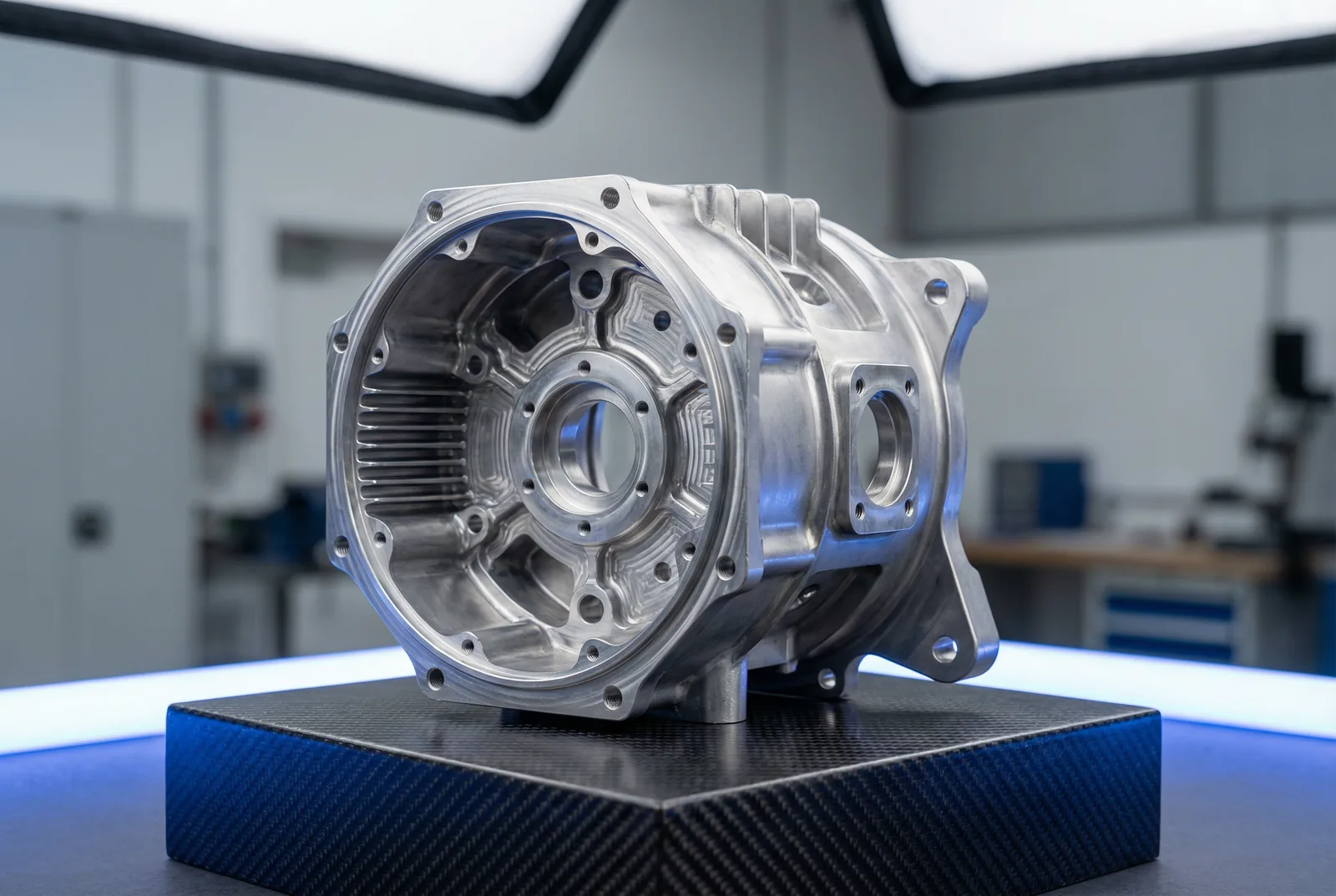
What is magnesium CNC machining?
Magnesium CNC machining uses computer-controlled milling, turning, drilling, and related cutting processes to produce accurate components from magnesium alloy stock. Magnesium has a density of about 1.74 g/cm³, making it a practical choice when low mass, structural performance, thermal behavior, vibration damping, or electromagnetic shielding matter.
Compared with many engineering metals, magnesium can machine efficiently, but chips and fine particles require controlled professional handling. Part design, alloy condition, tooling, chip evacuation, finishing, and inspection should therefore be reviewed as one manufacturing plan.
- Custom housings, brackets, frames, plates, shafts, and precision hardware
- Prototype, bridge, and repeat-production quantities
- DFM review for wall thickness, deep features, threads, finishes, and critical tolerances
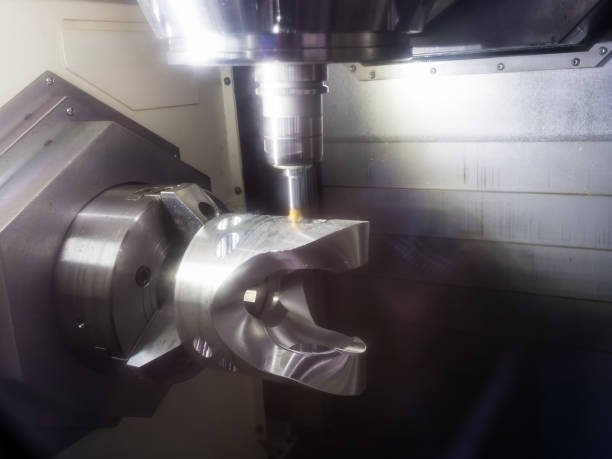
Why engineers choose magnesium alloys
Magnesium combines low density with useful strength and functional properties for parts where mass reduction affects performance.
Low component weight
Magnesium is roughly one-third lighter than aluminum by density, supporting weight-sensitive assemblies.
Efficient machinability
Low cutting resistance can support efficient material removal and clean features when tooling and parameters are controlled.
Vibration damping
Selected magnesium alloys can help reduce vibration in housings, instruments, robotics, and mobility applications.
EMI shielding
Magnesium enclosures can provide useful electromagnetic shielding for electronics and communication equipment.
Magnesium CNC machining capabilities
The achievable result depends on alloy, stock condition, part size, geometry, feature access, finishing, inspection, and quantity.
CNC Milling
Pockets, contours, bores, ribs, mounting patterns, and multi-face housing geometry.
CNC Turning
Shafts, pins, sleeves, bushings, fittings, tapers, and controlled concentric features.
Multi-Axis Machining
Additional-axis machining can reduce setups and improve relationships among complex features.
Drilling & Threading
Hole and thread strategies planned around chip evacuation, heat control, engagement, and assembly loads.
| Decision Item | Reference Capability | What Must Be Reviewed |
|---|---|---|
| Precision tolerance | As tight as ±0.005 mm for eligible critical features | Geometry, feature size, datum scheme, material condition, finish, and inspection method |
| Prototype lead time | From 5 business days for eligible projects | Material availability, quantity, complexity, finishing, inspection, and production schedule |
| Surface finish | As-machined Ra 0.8–3.2 μm where geometry allows | Tool access, cosmetic requirements, coating allowance, and protected areas |
| Machining routes | Milling, turning, drilling, threading, and multi-axis machining | Stock form, part envelope, setups, fixturing, and annual volume |
Common magnesium alloys for CNC machining
Select the exact grade and condition around strength, corrosion environment, temperature, forming history, stock availability, finishing, and cost. Material properties below are selection guidance; the governing material specification should be stated on the drawing.
| Alloy | General Profile | Typical Selection Reason | Example Applications |
|---|---|---|---|
| AZ31B | Wrought Mg-Al-Zn alloy | General-purpose balance of formability, machinability, and availability | Panels, electronic housings, brackets, lightweight structures |
| AZ61B | Higher-aluminum wrought alloy | Higher strength than AZ31B for structural requirements | Frames, aerospace hardware, performance components |
| AZ91D | Common casting alloy | Useful castability, strength, and corrosion performance after suitable treatment | Automotive housings, covers, equipment components |
| WE43 | Rare-earth, yttrium-containing alloy | Elevated-temperature and higher-performance applications | Aerospace, motorsport, and demanding structural parts |
| ZK60A | High-strength Mg-Zn-Zr alloy | Strength-to-weight performance in wrought components | Aerospace hardware, wheels, high-load lightweight parts |
Design guidelines for magnesium machined parts
Wall thickness
A 0.5 mm wall may be possible in suitable local features, but 1.0 mm or more is generally easier to hold and inspect.
Internal radii
Use practical corner radii—0.4 mm or larger where possible—to allow stronger tools and reduce stress concentration.
Deep features
Limit deep, narrow pockets and holes where tool reach, chip evacuation, rigidity, and inspection become difficult.
Threads and inserts
Review thread engagement, service load, repeated assembly, and whether inserts are appropriate for softer alloys.
Critical tolerances
Apply tight tolerances only to functional interfaces and identify datums, inspection points, and tolerance stacks.
Coating allowance
Mark masked areas, electrical contacts, sealing faces, and dimensions that must be controlled after finishing.
Safe machining, chip control, and quality planning
Solid magnesium components are used safely in many industries, but chips, dust, and heat generated during machining require a dedicated risk assessment and professional controls. The production route should be planned by a qualified machining supplier rather than treated like a standard aluminum job.
- Use suitable sharp tooling, stable cutting conditions, and controlled heat generation
- Continuously manage chips and prevent fine-particle accumulation
- Keep the correct metal-fire response equipment and trained personnel available
- Separate chip storage and recycling from incompatible materials and moisture
- Inspect datums, critical dimensions, threads, surface condition, and coating areas
Surface finishes for magnesium CNC parts
Magnesium commonly needs an appropriate conversion, coating, or sealing system matched to alloy, environment, appearance, wear, electrical contact, and dimensional requirements.
As Machined
Suitable for controlled indoor or short-term evaluation applications where the raw surface is acceptable.
Conversion Coating
Can improve corrosion behavior and prepare the surface for paint or other coating systems.
Powder Coating
A durable color finish used after appropriate magnesium pretreatment and masking.
Painting & Plating
Process selection depends on alloy, pretreatment, adhesion, corrosion, wear, and electrical requirements.
Applications for CNC machined magnesium components
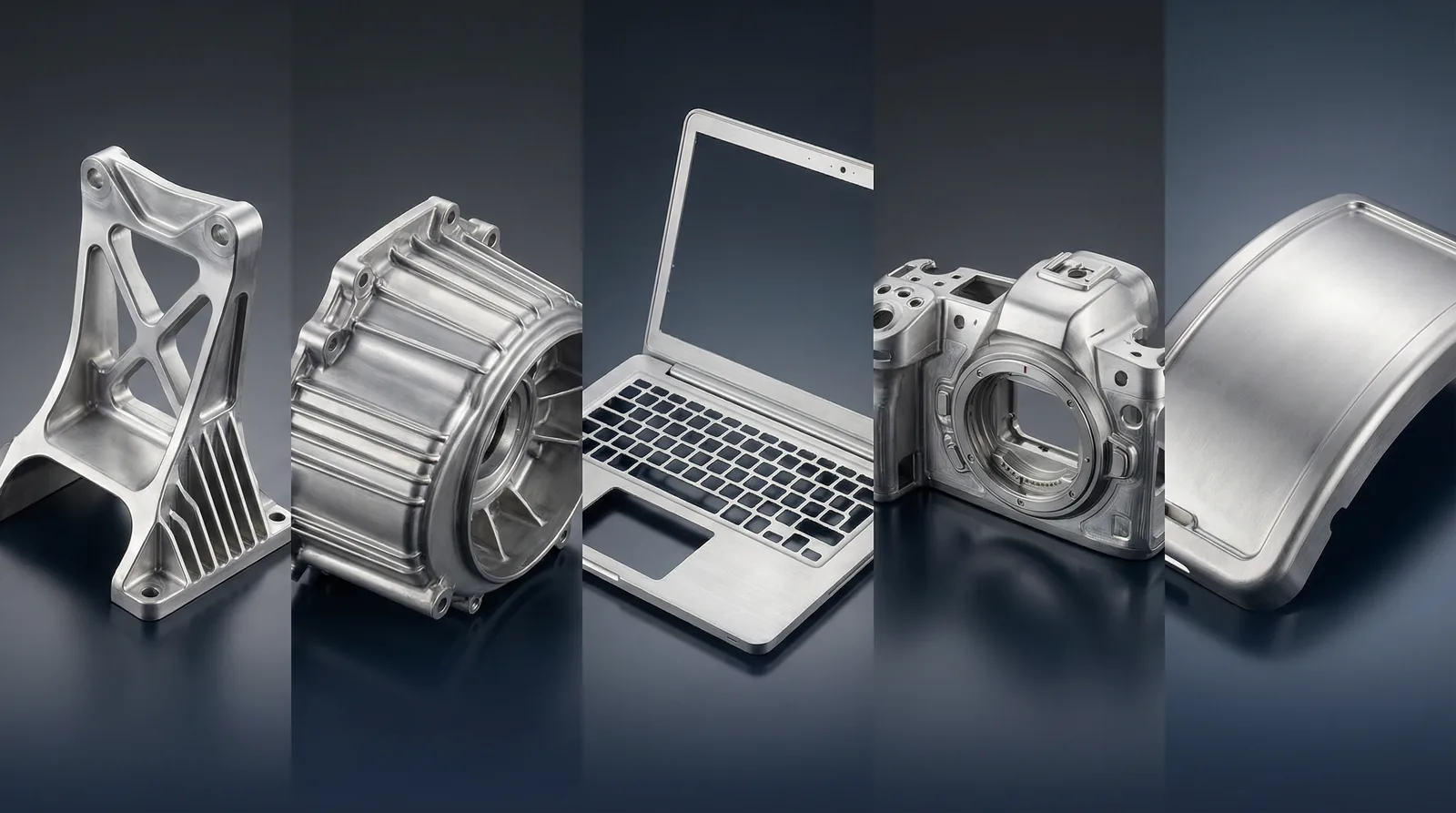
Magnesium is considered when lower moving mass, portability, vibration control, or shielding provides a measurable system benefit.
Aerospace & Drones
Housings, brackets, frames, covers, payload structures, and non-critical lightweight hardware.
Automotive & Motorsport
Cases, steering and dashboard structures, covers, mounts, and performance components.
Electronics & Imaging
Laptop chassis, camera bodies, instrument enclosures, heat-management parts, and EMI-shielding housings.
Robotics & Equipment
Moving links, actuator housings, end-effectors, portable equipment, fixtures, and precision frames.
From CAD file to finished magnesium parts
A structured review connects material specification, safety controls, geometry, tolerance, finish, inspection, quantity, and delivery.
Magnesium CNC machining FAQs
What tolerances can you achieve on magnesium CNC parts?
Eligible critical features can reach tolerances as tight as ±0.005 mm. Achievable tolerance depends on alloy and condition, geometry, feature size, wall thickness, datum scheme, finishing, and inspection method. Final capability is confirmed after drawing review.
What is the lead time for magnesium machined parts?
Eligible prototypes can start from 5 business days after order approval. The confirmed schedule depends on material availability, quantity, complexity, finishing, inspection, packaging, and the current production schedule.
Which magnesium alloys can be CNC machined?
Common options include AZ31B, AZ61B, AZ91D, WE43, and ZK60A. The best choice depends on stock form, strength, corrosion environment, temperature, finish, and availability.
Is magnesium safe to CNC machine?
Yes, when machining is performed by a qualified supplier using an appropriate risk assessment, chip and dust control, heat management, suitable fire-response equipment, trained personnel, and compliant storage and waste-handling practices.
Why use magnesium instead of aluminum?
Magnesium may be preferred when lower density, vibration damping, or EMI shielding creates a clear design advantage. Aluminum may be preferable for other strength, corrosion, cost, stock, or finishing requirements. The complete system should be compared, not density alone.
What files should I send for a quote?
Send a 3D CAD model and a PDF drawing showing alloy and condition, quantity, critical dimensions and datums, threads, finish, inspection requirements, application environment, and requested delivery date.
Which finishes are suitable for magnesium parts?
Depending on alloy and service conditions, options can include as-machined, conversion coating, painting, powder coating, plating, or a combined pretreatment and coating system. Masking and coating allowances should be defined before production.
Ready to quote custom magnesium CNC parts?
Upload the CAD model and drawing with alloy, condition, quantity, critical tolerances, finish, inspection, and requested delivery date.
Explore our CNC machining services, compare stainless steel CNC machining, brass machining, and copper machining, or contact our team.