Life Science CNC Machining Services
Custom metal and engineering-plastic components for diagnostic instruments, laboratory automation, fluid-handling systems, medical equipment and bioprocess hardware—from functional prototypes to repeat B2B production.

What is life science CNC machining?
Life science CNC machining is the manufacture of drawing-controlled mechanical parts used in laboratory, diagnostic, medical and bioprocess equipment. CNC milling, turning, EDM and fabrication create instrument frames, manifolds, housings, carriers, sensor mounts, motion components and test fixtures from production-grade metals and engineering plastics. A successful plan controls functional datums, sealing interfaces, fluid paths, alignment, burrs, surface condition and documentation—not only the nominal outside shape.
Why life science hardware needs a dedicated machining plan
Life science assemblies can combine precision motion, optics, sensors, fluid handling and repeated cleaning. We translate the customer drawing and risk priorities into a practical manufacturing and inspection route.
- Sample and fluid paths: ports, bores, threads, grooves and manifold intersections need clear dimensions, edge requirements and inspection access.
- Sensor and optical alignment: mounting datums, bores and mating faces must preserve the customer-defined relationship between mechanical, electronic and optical elements.
- Sealing interfaces: O-ring grooves, gasket lands and cover faces require coordinated geometry, flatness, surface condition and finish allowance.
- Motion and automation: shafts, carriers, nests and actuator mounts need repeatable position, wear control and assembly clearance.
- Cleanability and handling: recesses, burrs, exposed threads and cosmetic surfaces should be reviewed around the customer’s cleaning, packaging and end-use process.
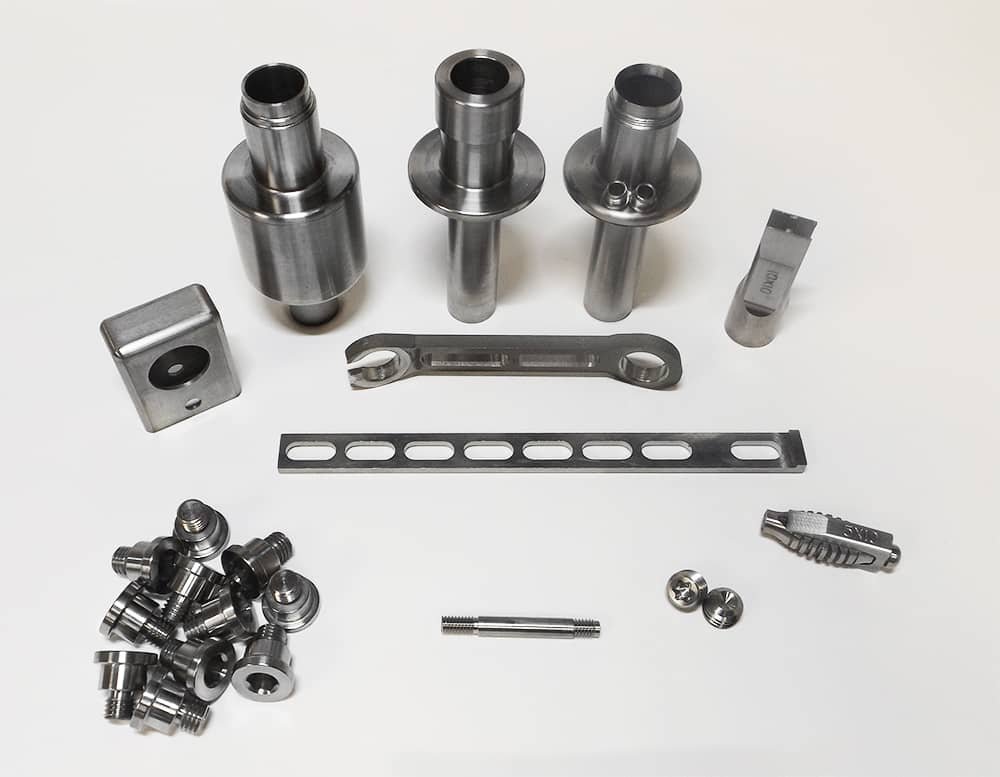
Life science components we can manufacture
Components are produced to customer-controlled drawings, material specifications and acceptance criteria for device developers, instrument OEMs, laboratories and equipment manufacturers.
Diagnostic analyzers
Frames, housings, covers, cartridge nests, sensor mounts, fluid manifolds and alignment hardware for in-vitro diagnostic and point-of-care equipment.
Laboratory automation
Sample carriers, pipetting-platform components, gantry brackets, gripper parts, actuator mounts, racks and calibration fixtures.
Fluid-handling hardware
Valve and pump bodies, manifold blocks, fittings, flow-cell hardware, tubing interfaces and sealing components made to the approved design.
Imaging and optical instruments
Camera and detector mounts, optical benches, lens-support hardware, alignment frames and vibration-sensitive mechanical structures.
Medical equipment hardware
Non-sterile mechanical housings, handles, instrument bodies, brackets and interfaces for customer-designed medical and clinical equipment.
Bioprocess and pharma equipment
Mechanical supports, sensor blocks, guides, change parts, clamps, trays and equipment interfaces for process-development and production systems.
Prototype and test hardware
Functional prototypes, verification fixtures, alignment nests, endurance-test parts and bridge quantities in production-grade materials.
Sample-management components
Racks, holders, trays, indexing plates, enclosure parts and custom fixtures for repeatable sample positioning and transport.
Life science machining capabilities at a glance
| Requirement | Available approach | Engineering note |
|---|---|---|
| General dimensional tolerance | Applied by drawing and feature function | The quote review confirms achievable values for the material, geometry, setup and inspection method. |
| Critical precision features | Selected features can reach ±0.001 mm | This requires engineering review, suitable geometry, stable datums, process control and a defined measurement plan. |
| Prototype lead time | As fast as 3 days for suitable parts | Actual timing depends on material availability, complexity, finish, inspection, documentation and quantity. |
| Production range | One-off prototypes, bridge quantities and repeat production | Fixtures, setup control and inspection plans can mature with the program. |
| Core processes | 3-, 4- and 5-axis milling; turning; grinding; wire EDM; sheet fabrication | The route is selected around datum control, feature access, repeatability and total cost. |
| Quality verification | FAI, in-process and final inspection | CMM, gauges, micrometers and other suitable calibrated equipment are selected by feature and requirement. |
| Documentation | Inspection and material records available when requested | State report format, traceability and certification needs in the RFQ so they are planned and quoted. |
Metals and engineering plastics for life science equipment
Material selection should follow the approved design, mechanical load, temperature, chemical exposure, wear, optical needs, cleaning method and required documentation.
Stainless steel
Customer-specified stainless grades support corrosion-resistant instrument bodies, fluid-system hardware, shafts and loaded structures. Review our stainless steel CNC machining capabilities.
Titanium
Titanium combines low mass, strength and corrosion resistance for selected equipment and instrument components. See our titanium machining service.
Aluminum
Aluminum suits lightweight frames, instrument housings, heat-management parts, trays and motion structures. Compare alloys and finishes in our aluminum CNC machining service.
PTFE and POM/Delrin
Machined PTFE supports selected low-friction and chemical-exposure applications, while Delrin machined parts provide stable, low-friction mechanical features.
Clear and durable plastics
Polycarbonate machining and acrylic CNC machining support guards, viewing windows, covers and selected optical or fluid-observation components.
Nylon, PEEK and customer grades
Machined nylon suits wear parts and guides. PEEK and other customer-specified grades are reviewed case by case for stock, geometry, stability and documentation.
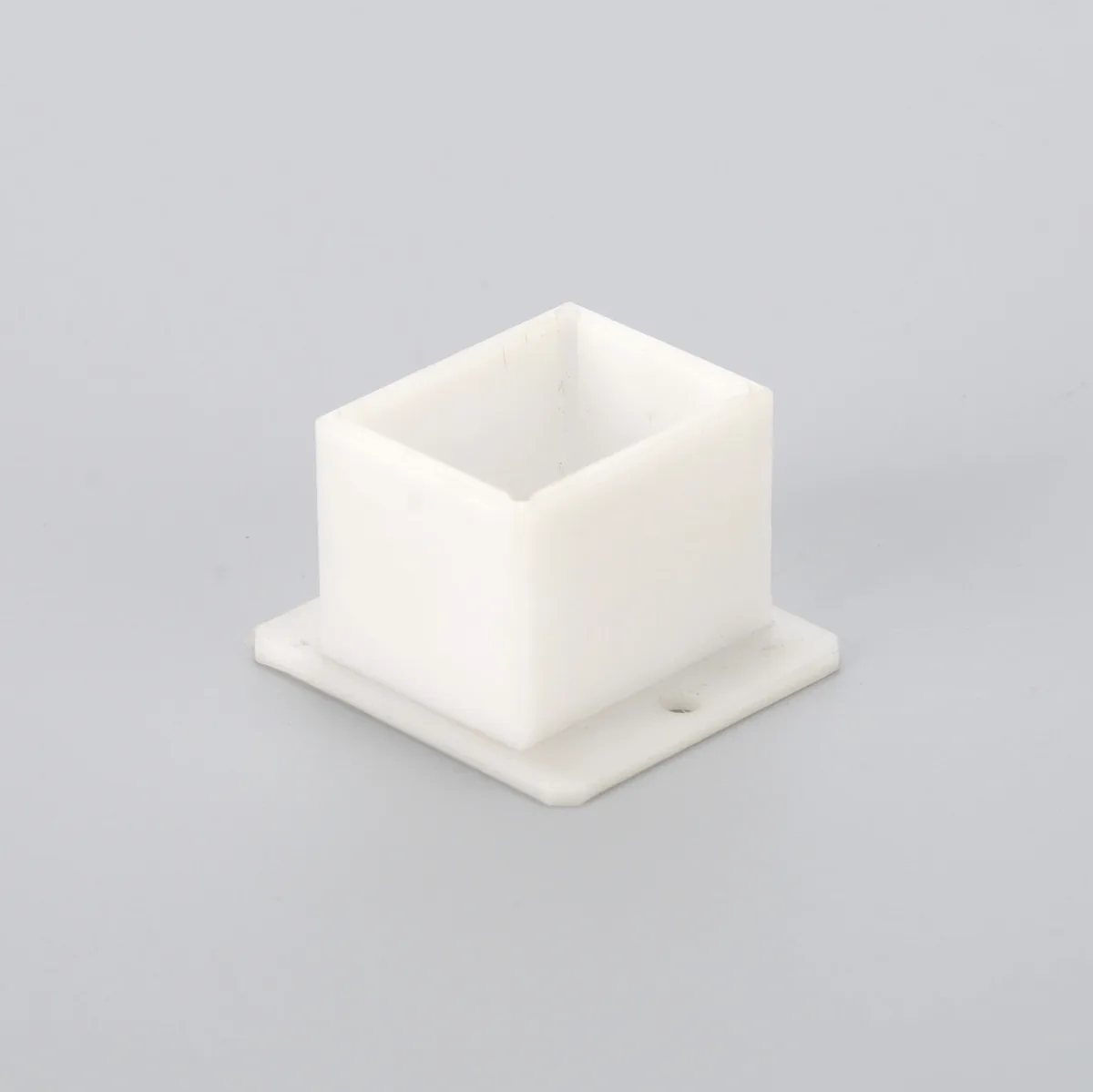
Processes matched to instrument geometry and risk
A stable route reduces setups, protects functional datums and improves repeatability across metal and plastic component families.
3- to 5-axis milling
CNC milling creates housings, manifolds, nests and plates; 5-axis machining reduces setups for compound angles and multi-sided parts.
CNC turning
Our CNC turning service supports sleeves, shafts, fittings, valve components and rotational instrument parts.
Wire EDM and precision operations
Wire EDM machining, grinding and selected secondary operations address narrow features, hard materials, straightness and flatness needs.
Fabrication and prototypes
Precision sheet metal fabrication supports enclosures and frames, while CNC rapid prototyping accelerates functional validation.
Life science design details to define before quoting
| Design area | What to specify | Why it matters |
|---|---|---|
| Functional datums and alignment | Primary datums, position, runout, flatness and relationships between sensors, optics, motion or mating components. | Prevents independent feature control from missing the assembly’s real functional relationship. |
| Fluid paths and manifold ports | Bore size, intersection, thread, edge break, dead-volume concern, surface condition and test scope. | Tool access, burr removal and inspection planning depend on the complete internal geometry. |
| Sealing interfaces | O-ring groove standard, gasket compression, land flatness, surface finish and coating restrictions. | Machining and finishing must work together to preserve the customer-designed seal. |
| Thin walls and deep pockets | Minimum wall, allowable distortion, corner radius, depth, cosmetic face and free-state inspection condition. | Workholding and material-removal sequence can influence stability and appearance. |
| Threads and inserts | Thread class, engagement, insert type, pull-out requirement, locking method and protected areas. | Supports reliable assembly and prevents finish or cleaning operations from damaging interfaces. |
| Cleanability and crevices | Customer cleaning method, inaccessible recesses, sharp internal corners, exposed threads and acceptable residue. | Allows DFM review around geometry and handling without assuming a validated sanitary or sterile process. |
| Burrs and particles | Edge-break limits, prohibited burr locations, fluid-contact intersections and visual acceptance criteria. | Burr removal must protect dimensions, surfaces and small passages. |
| Finish thickness and masking | Finish type, thickness, color, cosmetic class, sealing lands, bores, threads and dimensions controlled after coating. | Surface treatment can change fit, appearance, friction and sealing performance. |
Finishes planned around fit, cleaning and appearance
Passivation and electropolishing
Customer-specified passivation or electropolishing may be coordinated for suitable stainless components. State the governing specification and required documentation in the RFQ.
Anodizing
Aluminum anodizing supports corrosion protection, wear resistance and color coding. Type, thickness and masking should be defined.
Bead blasting
Bead blasting can create a uniform matte appearance before anodizing or as a customer-approved finish.
Powder coating
Powder coating services provide durable coverage for frames, guards and enclosures; precision interfaces normally require masking.
Polishing and brushing
Customer-defined polishing or brushing can address appearance and selected surface requirements. Specify direction, roughness or approved sample where relevant.
As-machined and protected zones
Functional faces can remain as-machined. Clearly identify fluid-contact areas, sealing lands, optical interfaces, threads, bores and cosmetic surfaces.
Inspection planned around functional risk and revision control
The drawing, revision, material, finish and acceptance requirements become the basis for manufacturing and inspection. High-risk features can receive first-article and in-process checks before final release.
- Contract review of drawing, revision, model, material, finish and quantity
- First-article inspection when requested for setup or process validation
- In-process checks on critical and drift-sensitive features
- Final dimensional and visual inspection
- CMM and suitable calibrated equipment selected by feature
- Inspection reports, material records and agreed traceability when specified
- Protective packaging for cosmetic faces, small passages, threads and sealing lands

How a life science machining project moves through our factory
Clear technical handoffs reduce schedule risk and protect design intent through development revisions, verification builds and repeat orders.
RFQ review
Review CAD, drawing, revision, material, finish, quantity, documents and delivery target.
DFM and quote
Confirm access, datums, critical features, risks, process route and commercial terms.
Prototype
Machine initial parts in the agreed material with focused inspection for customer evaluation.
Customer validation
Customer testing and inspection feedback establish the approved revision and acceptance criteria.
Repeat production
Apply fixtures, setup controls and in-process checks as quantities and demand mature.
Final delivery
Complete final inspection, protective packaging and the agreed documentation package.
A responsive manufacturing partner for life science equipment teams
Engineering-led review
Geometry, tolerances, material behavior, sealing, finishing and inspection needs are reviewed before production.
Metal and plastic capability
Milling, turning, grinding, wire EDM and fabrication support diverse component families and assemblies.
Prototype-to-production continuity
Technical intent can be carried from functional prototypes into bridge and repeat manufacturing.
Controlled quality
ISO 9001:2015 processes, suitable calibrated equipment and defined checkpoints support repeatability.
Integrated finishing coordination
Machining and surface-treatment planning protects dimensions, sealing lands, threads and cosmetic criteria.
International B2B support
We support OEM, engineering and supply-chain teams with project communication, documentation planning and delivery coordination.
Connected manufacturing support for multidisciplinary instruments
Life science systems often combine optical alignment, electronics and automation. Explore our optics and photonics machining, electronics CNC machining services and robotics and automation machining for adjacent design and production guidance.
Life science CNC machining questions
What life science components can Best Machining produce?
We can manufacture customer-designed diagnostic equipment housings, laboratory automation components, manifold bodies, sample carriers, optical mounts, motion parts, equipment brackets, instrument hardware and test fixtures. Send a 3D model and controlled drawing for a part-specific review.
Can you hold ±0.001 mm on medical or laboratory equipment parts?
Selected critical features can reach ±0.001 mm after engineering review. This is not a blanket tolerance. Achievability depends on material, geometry, datum strategy, thermal stability, setup, process capability and the measurement method.
How quickly can life science prototypes be delivered?
Suitable urgent prototypes can be completed as fast as 3 days. Actual lead time depends on material availability, part complexity, surface treatment, inspection, documentation and quantity.
Which materials are common for life science equipment components?
Common options include customer-specified stainless steel, titanium and aluminum, plus engineering plastics such as PEEK, PTFE, POM/Delrin, polycarbonate, acrylic and nylon. The approved choice should follow mechanical, chemical, temperature, optical, cleaning and documentation needs.
Can you machine manifolds and fluid-handling components?
Yes, when ports, intersecting bores, threads, seal grooves, edge requirements, surface condition and acceptance criteria are fully defined. Pressure, leak, flow or cleanliness testing is not assumed unless it is separately specified and agreed.
Do you provide medical regulatory or sterile manufacturing certification?
This page does not claim ISO 13485, FDA approval, cleanroom production, sterile processing or biocompatibility validation. We manufacture mechanical parts to the customer drawing under our ISO 9001:2015 quality system and can plan agreed material and inspection records.
What files and information should I send for a quote?
Send a STEP, STP, X_T or other usable 3D model plus a controlled PDF drawing. Include revision, material, finish, quantity, critical dimensions, datums, threads, sealing requirements, cosmetic criteria, inspection reports, traceability needs and target delivery.
Can you support repeat production and revision control?
Yes. After prototype or first-article review, fixtures, setup controls and inspection checkpoints can be adapted for repeat orders. Provide the current controlled revision and identify any changed features so the manufacturing plan can be updated.
Get a manufacturability review for your life science components
Upload your CAD files and controlled drawing. Tell us the application, material, critical features, finish, inspection documentation, quantity and delivery target. Our team will review manufacturability and prepare a project-specific quote.