In the world of precision manufacturing and metal finishing, achieving the perfect surface is both an art and a science. For product designers, engineers, and manufacturers, a high-quality finish not only enhances a product’s aesthetic appeal but also improves its durability, corrosion resistance, and functional performance. Among the most versatile and widely used surface treatment methods is bead blasting — the process responsible for the clean, uniform, and non-reflective matte finish seen on countless products, from high-end consumer electronics and aerospace components to medical devices and automotive parts.
This guide provides a definitive, comprehensive exploration of bead blasting, designed for professionals seeking to master this finishing technique. We cover every aspect of the process, from the fundamental principles and equipment to the various types of blasting media and their specific applications. This single page is designed to be more thorough than any other resource available, ensuring you have all the information you need to make informed decisions for your projects.
What Is Bead Blasting? Definition & Core Principles
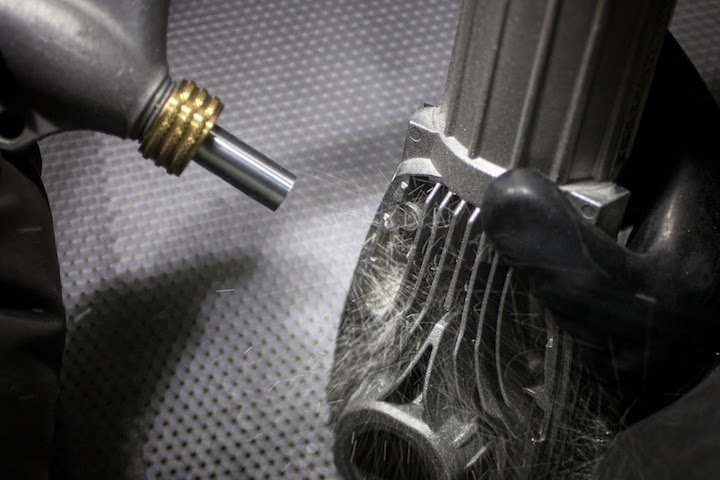
Bead blasting is a specialized abrasive blasting technique that propels a stream of fine, spherical media — most commonly glass beads — at a surface under high pressure using compressed air. Unlike more aggressive methods such as sandblasting, which use angular abrasives to cut or etch the material, bead blasting is designed for surface modification with minimal material removal. The primary goal is to produce a smooth, clean, and uniform satin or matte finish without altering the part’s dimensional tolerances.
At the heart of the bead blasting process is a mechanical action known as peening. When the spherical beads strike the surface, they create thousands of tiny, overlapping dimples. This microscopic texturing alters the way light reflects off the surface — scattering it to eliminate glare and produce the characteristic soft, matte appearance. This peening action also imparts a compressive stress layer on the surface of the material, which can improve its fatigue life and resistance to stress corrosion cracking, making bead blasting a process with both cosmetic and functional benefits.
Key Definition: What Makes Bead Blasting Unique?
The defining characteristic of bead blasting is the use of spherical media. Unlike angular abrasives that cut and scratch the surface, spherical beads “peen” it — creating uniform, overlapping dimples that scatter light and produce a smooth, consistent matte finish. This is why bead blasting is the preferred method when dimensional accuracy must be maintained and a cosmetically superior finish is required.
Need help applying this to your CNC machined parts?
How Does the Bead Blasting Process Work? Step-by-Step
The bead blasting process is methodical and requires precise control to achieve a consistent, high-quality finish. At mybestmachining.com, we follow a rigorous, multi-stage process to ensure every component meets our stringent quality standards. Here is a detailed breakdown of each stage:
Surface Preparation & Masking
The component is thoroughly cleaned and degreased to remove oils, coolants, or other contaminants. Critical areas such as threaded holes, sealing surfaces, and tight-tolerance bores are carefully masked with specialized tape or plugs to protect them from the abrasive stream.
Equipment Setup & Media Selection
The appropriate blasting media is selected based on the part material and desired finish. The blast cabinet is prepared, and the air pressure is calibrated to the optimal level. Pressure typically ranges from 20 to 90 PSI depending on the media and material.
Blasting the Surface
The part is placed inside the enclosed blast cabinet. Skilled technicians use a hand-held nozzle to direct the media stream across the surface, maintaining a consistent distance (typically 6–12 inches) and angle (typically 45–90°) for a uniform finish across all surfaces.
Post-Blasting Cleaning
After blasting, the part is removed and thoroughly cleaned using compressed air, soft brushes, or ultrasonic cleaning to remove all residual media from blind holes, pockets, and complex geometries. This is a critical step for quality assurance.
Inspection & Quality Control
The finished part is inspected under controlled lighting to ensure the finish is uniform and free of missed spots, streaks, or over-blasted areas. Surface roughness (Ra) measurements may be taken for critical applications to verify compliance with specifications.
Post-Processing (Optional)
Depending on the application, the bead-blasted part may proceed to additional finishing steps such as anodizing, powder coating, painting, or passivation. The bead blast finish provides an excellent substrate for these subsequent processes.
Bead Blasting Process: Video Overview
The following video provides a practical demonstration of the bead blasting process, showing the equipment, technique, and the resulting surface finish:
Need help applying this to your CNC machined parts?
Types of Bead Blasting Media: A Comprehensive Comparison
The choice of blasting media is one of the most critical factors in determining the final appearance and properties of a bead-blasted surface. Each type of media has unique characteristics in terms of hardness, shape, recyclability, and the finish it produces. Selecting the right media is essential for achieving the desired outcome efficiently and cost-effectively.
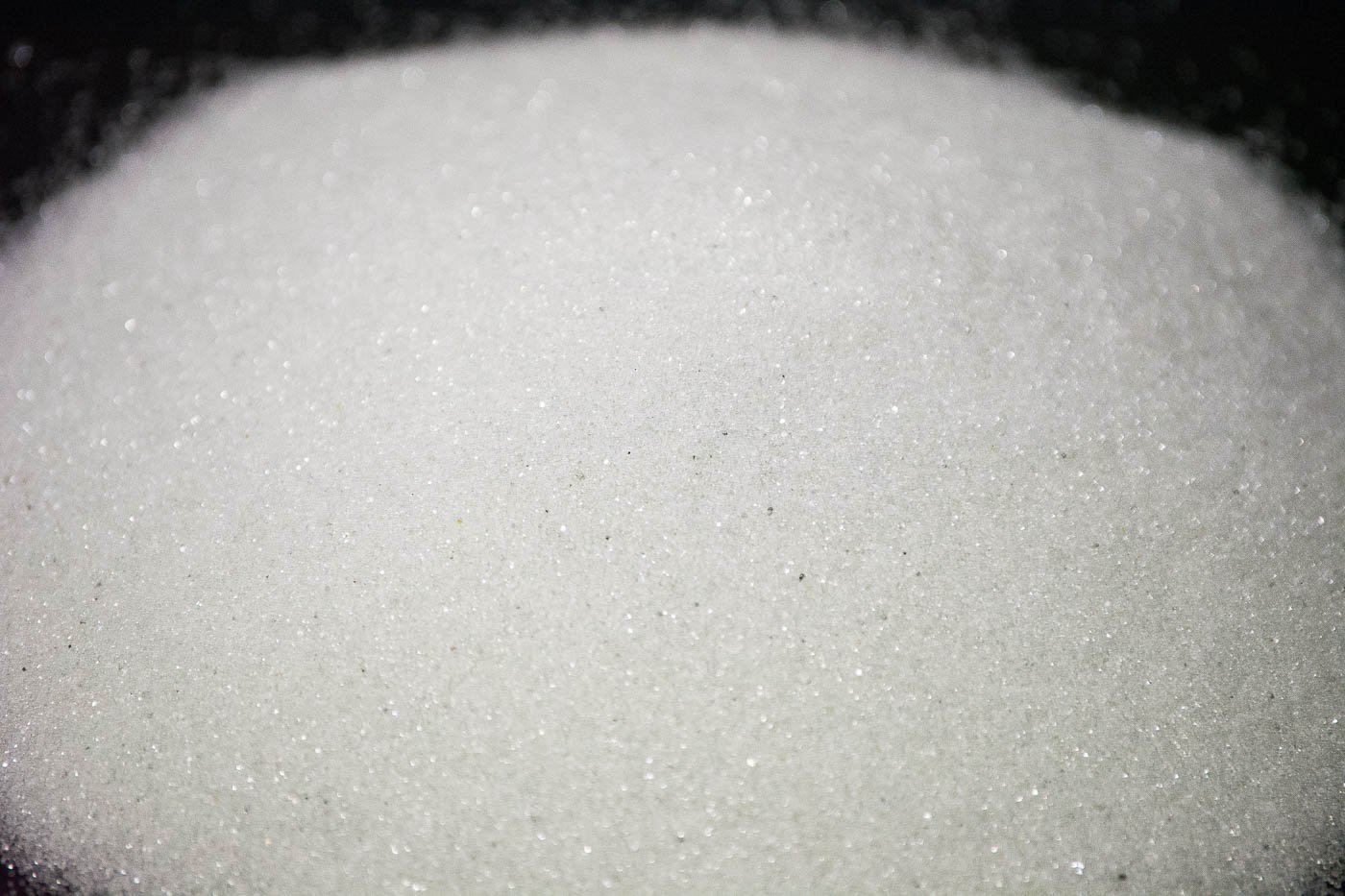
🔵 Glass Beads
The most common bead blasting media, made from lead-free soda-lime glass. Chemically inert, contains no free silica, and is environmentally friendly. Creates a bright, uniform satin or matte finish.
⚪ Ceramic Beads
Made from zirconium oxide (ZrO₂) or aluminum oxide (Al₂O₃) composites. Harder and more durable than glass beads, offering excellent sphericity and a very consistent finish. Higher upfront cost but superior longevity.
⚫ Steel Shot
Small spherical steel beads made from carbon or alloy steel. Available in SAE standard sizes from S-70 (~0.125mm) to S-930 (~3mm) and hardness ranges from 40 HRC to 62 HRC. Extremely durable and reusable.
🟤 Aluminum Oxide
A tough, angular abrasive grit (Al₂O₃) with a hardness of 9 Mohs. Not technically a “bead” due to its angular shape, but widely used in blasting applications requiring more aggressive surface preparation and etching.
🟡 Plastic Media
Made from recycled plastic granules (urea, acrylic, polyester, nylon). The softest and most gentle blasting media available. Ideal for delicate parts, thin-walled components, and stripping coatings without damaging the substrate.
🟠 Garnet
A natural mineral abrasive (almandine garnet) with sharp, angular particles. Silica-free and relatively eco-friendly. Provides a medium-aggressive blast, offering a rougher texture than glass beads while avoiding the contamination risks of metal abrasives.
Bead Blasting Media Selection Chart
Use the following comprehensive comparison chart to select the most appropriate blasting media for your specific application. This chart compares all major media types across key performance characteristics:
| Characteristic | Glass Beads | Ceramic Beads | Steel Shot | Aluminum Oxide | Plastic Media | Garnet |
|---|---|---|---|---|---|---|
| Media Shape | ⬤ Spherical | ⬤ Spherical | ⬤ Spherical | ▲ Angular | ▲ Angular | ▲ Angular |
| Hardness (Mohs) | 5.5 | 6.5–7.5 | 6–7.5 | 9 | 2–4 | 7.5–8.5 |
| Cleaning / Removal | ✔ Good | ✔ Good | ✔ Excellent | ✔ Excellent | ✔ Light | ✔ Good |
| Peening Action | ✔ Yes | ✔ Yes | ✔ Excellent | ✘ No | ✘ No | ✘ No |
| Surface Etching | ✘ No | ✘ No | ✘ No | ✔ Excellent | ~ Minimal | ✔ Good |
| Material Removal | Very Low | Very Low | Very Low | Medium-High | Very Low | Medium |
| Recyclability | Medium (20–30x) | Very High (50–150x) | Extremely High (100s) | Medium-High | Medium | Medium-Low |
| Typical Blast Pressure (PSI) | 20–55 | 20–90 | 20–90 | 20–90 | 20–60 | 30–80 |
| Suitable for Soft Metals | ✔ Yes | ✔ Yes | ~ With care | ✘ No | ✔ Yes | ~ With care |
| Suitable for Plastics | ✔ Yes | ~ With care | ✘ No | ✘ No | ✔ Ideal | ✘ No |
| Relative Cost | Low | Moderate-High | Moderate-High | High | Moderate | Low-Moderate |
Need help applying this to your CNC machined parts?
Bead Blasting Equipment: The Complete Setup Guide
Achieving a professional bead blast finish requires specialized equipment designed for safety, efficiency, and consistency. Understanding each component of the blasting setup will help you make better decisions when selecting a service provider or setting up your own operation.
The Bead Blasting Cabinet
The bead blasting cabinet is the enclosed chamber where the blasting process takes place. It contains the abrasive media and the workpiece, protecting the operator from dust and debris while recirculating the media for reuse. When evaluating a blasting cabinet, look for the following key features:
Robust Construction
Heavy-gauge steel construction provides durability and maintains structural integrity under the intense vibration of blasting. Stable legs or frame are essential to prevent wobbling and safety hazards.
Seamless Cabinet Sealing
An airtight seal prevents dust, debris, and abrasive media from escaping the cabinet, protecting the operator and the surrounding workspace. Safety interlocks should disable blasting when the door is opened.
View Window & Lighting
A large, clear viewing window with replaceable protective films allows real-time monitoring of the blasting process. Proper internal lighting is essential for ensuring complete, uniform coverage.
Efficient Dust Collection
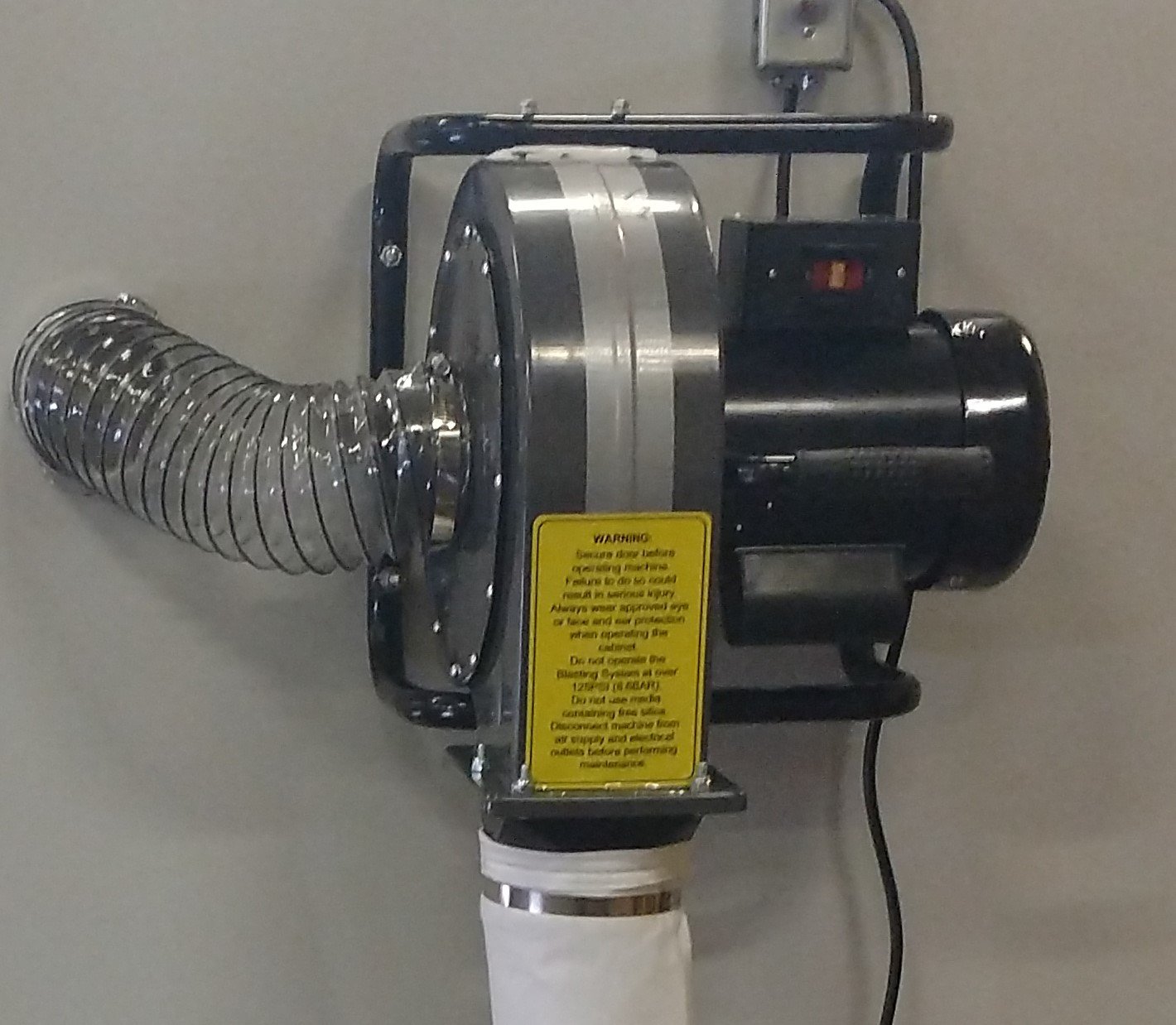
A robust dust collection and extraction system removes airborne particles quickly, maintains visibility inside the cabinet, and ensures a safe working environment for the operator.
Air Compressor Requirements
The air compressor is the power source of the bead blasting system. It must be capable of delivering a consistent, high-pressure air stream at the required volume (CFM) to maintain effective blasting. For most cabinet-based bead blasting operations, a compressor capable of delivering 5–20 CFM at 60–100 PSI is typically required, depending on the nozzle size and media type.
Bead Blasting Gun Types
The blasting gun directs the flow of media and compressed air onto the workpiece. There are two primary types of blasting systems:
| Gun Type | Operating Principle | Advantages | Disadvantages | Best For |
|---|---|---|---|---|
| Pressure Blast (Direct Pressure) | Media is pressurized in a separate vessel and mixed with air at the nozzle | High efficiency, fast material removal, consistent media flow | Higher cost, more complex setup | High-volume production, heavy-duty cleaning |
| Suction/Gravity Feed | Air stream creates a vacuum that draws media from a hopper into the nozzle | Lower cost, simpler operation, easier media changes | Lower efficiency, less consistent media flow | Light-duty finishing, small parts, precision work |
Need help applying this to your CNC machined parts?
Bead Blasting Finish: Surface Roughness & Technical Specifications
A key technical aspect of bead blasting is the resulting surface roughness, typically measured as Ra (Roughness Average) in micrometers (µm) or microinches (µin). The Ra value represents the average deviation of the surface profile from the mean line and is the most commonly specified parameter for bead-blasted surfaces. Understanding the relationship between media selection and the resulting Ra value is essential for specifying the correct finish for your application.
| Media Grade | Typical Mesh Size | Ra (µm) | Ra (µin) | Appearance | Typical Applications |
|---|---|---|---|---|---|
| Very Fine | #170–325 | 0.6 – 1.2 µm | 24 – 47 µin | Bright Satin | Medical devices, optics, precision instruments |
| Fine | #100–170 | 1.2 – 1.6 µm | 47 – 63 µin | Smooth Matte | Consumer electronics, aerospace components |
| Medium | #60–100 | 1.6 – 3.2 µm | 63 – 126 µin | Standard Matte | General machined parts, automotive, industrial |
| Coarse | #40–60 | 3.2 – 6.0 µm | 126 – 236 µin | Textured Matte | Non-slip surfaces, heavy industrial parts |
Industry Recommendation: For most cosmetic applications, a medium-grade glass bead (Mesh #60–100) producing an Ra of 1.6–3.2 µm is the standard specification. Xometry recommends limiting surface roughness to no lower than 32 µin Ra (0.8 µm) for bead-blasted parts. Specifying tighter tolerances significantly increases cost and processing time.
Surface Roughness Comparison: Bead Blasting vs. Other Finishes
| Finishing Process | Typical Ra Range (µm) | Appearance | Dimensional Impact |
|---|---|---|---|
| As-Machined (CNC) | 0.8 – 6.3 µm | Directional tool marks | None |
| Bead Blasting (Fine) | 0.8 – 1.6 µm | Uniform satin matte | Negligible |
| Bead Blasting (Medium) | 1.6 – 3.2 µm | Uniform standard matte | Negligible |
| Sandblasting (Aluminum Oxide) | 3.2 – 12.5 µm | Rough, etched matte | Low-Moderate |
| Electropolishing | 0.1 – 0.8 µm | Bright, mirror-like | Removes material |
| Powder Coating | 2.0 – 5.0 µm (surface) | Smooth, colored | Adds thickness |
| Anodizing (Type II) | Follows substrate Ra | Colored, protective | Minimal |
Need help applying this to your CNC machined parts?
Bead Blasting vs. Sandblasting: Key Differences Explained
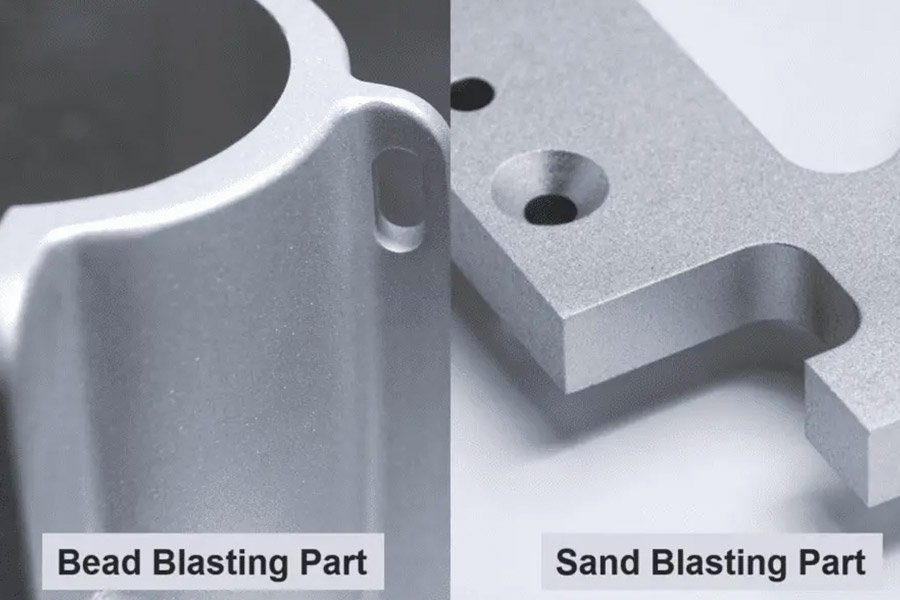
Bead blasting and sandblasting are both forms of abrasive blasting, but they are fundamentally different processes with distinct applications, advantages, and limitations. Understanding these differences is crucial for selecting the right method for your project.
🔵 Bead Blasting
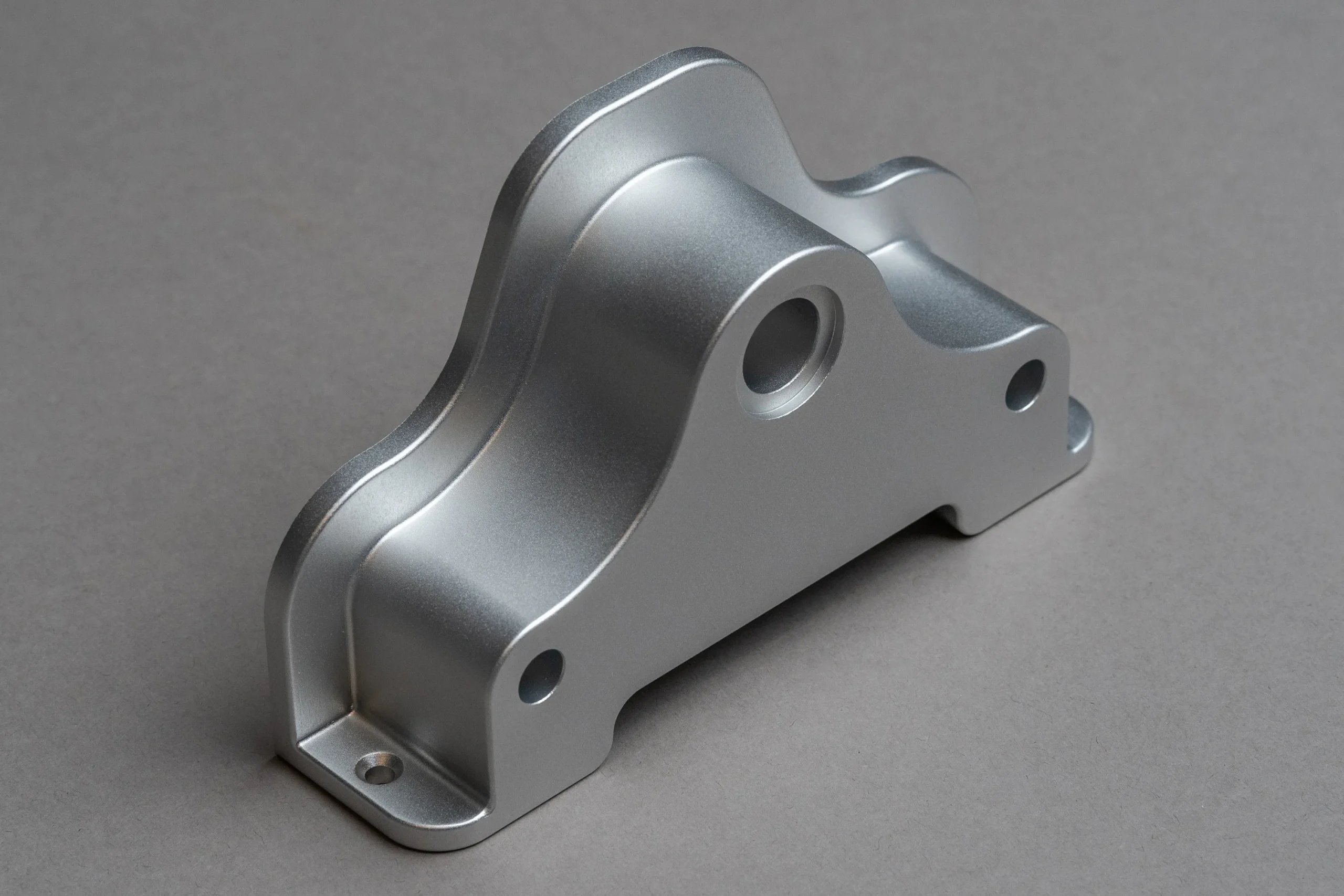
Spherical media creates a smooth, uniform, satin-matte finish with minimal material removal. Ideal for cosmetic finishing and maintaining dimensional accuracy.
🟤 Sandblasting
Angular media aggressively etches and profiles the surface, removing more material and leaving a rougher finish. Ideal for heavy-duty cleaning and surface preparation for coatings.
| Feature | Bead Blasting | Sandblasting |
|---|---|---|
| Media Type | Spherical (glass, ceramic, steel shot) | Angular (silica sand, aluminum oxide, garnet) |
| Action on Surface | Peening — creates overlapping dimples | Cutting/Etching — scratches and profiles surface |
| Surface Finish | Smooth, uniform, satin or matte | Rough, profiled, dull matte |
| Material Removal | Minimal to negligible | Significant — can affect dimensions |
| Dimensional Impact | Negligible — safe for tight tolerances | Moderate — not suitable for tight tolerances |
| Paint Adhesion Prep | Poor — does not etch for adhesion | Excellent — creates mechanical bond profile |
| Rust/Paint Removal | Slow — only effective for light rust | Fast — highly effective for heavy rust/coatings |
| Suitable for Delicate Parts | ✔ Yes | ✘ No |
| Health & Safety | Safer — no free silica dust | Silicosis risk with silica sand media |
| Environmental Impact | Lower — reusable media, no chemicals | Higher — media often single-use, dust hazards |
| Primary Use Case | Cosmetic finishing, cleaning, peening | Aggressive cleaning, rust/paint removal, surface prep |
✅ Bead Blasting Advantages
- No free silica or silica dust hazard
- Gentle on materials, preserves dimensions
- Creates a bright, attractive satin finish
- Media is highly reusable (up to 30+ cycles)
- Improves fatigue life through peening
- Environmentally friendly process
- Safe for delicate and thin-walled parts
❌ Bead Blasting Limitations
- Slow at removing heavy paint and coatings
- Does not etch surfaces for paint adhesion
- Less effective on very hard materials
- Generates dust requiring containment
- Media breakdown requires periodic replacement
- Requires skilled operator for consistent results
Need help applying this to your CNC machined parts?
Bead Blasting for Different Materials: A Practical Guide
Bead blasting is a versatile process compatible with a wide range of engineering materials. However, the optimal media type, pressure, and technique vary significantly depending on the substrate. The following guide provides specific recommendations for the most common materials encountered in precision manufacturing.
🔩 Aluminum & Aluminum Alloys
Ideal for bead blasting. Glass beads at 30–50 PSI produce a clean, uniform matte finish that is perfect as a pre-treatment for anodizing. Aluminum oxide can be used for a more aggressive etch prior to painting. Avoid steel shot to prevent iron contamination.
⚙️ Stainless Steel
Glass beads or ceramic beads effectively remove heat-treat scale, weld discoloration, and machining marks, restoring a clean, non-directional finish. Use stainless steel shot or ceramic beads to avoid iron contamination that could compromise corrosion resistance.
✈️ Titanium
Widely used in aerospace and medical applications. Glass or ceramic beads at moderate pressure produce an excellent cosmetic finish and can improve fatigue life. Avoid aluminum oxide, which can embed in the surface and cause contamination issues.
🔧 Carbon Steel & Cast Iron
Steel shot is the preferred media for heavy-duty cleaning, descaling, and shot peening of carbon steel and cast iron parts. Glass beads can be used for lighter cleaning and cosmetic finishing of less contaminated surfaces.
🔶 Copper & Brass
Glass beads at low pressure (20–40 PSI) are recommended for copper and brass to avoid excessive material removal. These soft metals require careful pressure control to achieve a uniform finish without distortion or over-blasting.
🧪 Plastics & Composites
Plastic media (urea, acrylic) is the safest choice for plastic and composite parts, providing gentle cleaning and de-flashing without damaging the substrate. Glass beads at very low pressure can also be used for harder engineering plastics like PEEK or Nylon.
Need help applying this to your CNC machined parts?
Applications of Bead Blasting Across Industries
The versatility of bead blasting makes it an indispensable surface finishing process across a wide range of industries. Its ability to produce a consistent, aesthetically pleasing finish while maintaining dimensional integrity makes it the preferred choice for applications where both appearance and precision are critical.
Aerospace
Turbine blades, structural components, landing gear, and fasteners. Shot peening with steel media improves fatigue life of critical components.
Automotive
Engine components, transmission parts, wheels, and body panels. Restoration of vintage car parts and preparation for powder coating.
Medical & Dental
Surgical instruments, orthopedic implants, and medical device housings. Reduces glare in operating rooms and improves grip on instruments.
Consumer Electronics
Laptop casings, camera bodies, smartphone frames, and audio equipment. Provides the premium, matte finish associated with high-end products.
Industrial Manufacturing
Deburring, cleaning, and finishing of machined, cast, and 3D-printed parts. Preparation for subsequent coating processes.
Marine
Cleaning and restoration of marine hardware, propellers, and structural components. Removal of corrosion and marine growth.
Robotics & Automation
Finishing of robot arm components, end effectors, and precision mechanical assemblies requiring a clean, consistent surface.
Architecture & Design
Decorative metal panels, signage, and architectural hardware. Creates unique surface textures for aesthetic and functional purposes.
Need help applying this to your CNC machined parts?
Advantages and Disadvantages of Bead Blasting
Like any manufacturing process, bead blasting has specific strengths and limitations. A thorough understanding of both will help you determine whether it is the right choice for your application.
| Aspect | Details | Impact |
|---|---|---|
| ✅ Uniform Cosmetic Finish | Produces a consistent, non-directional matte or satin finish that effectively hides machining marks, weld discoloration, and minor surface imperfections. | High Benefit |
| ✅ Dimensional Accuracy | Negligible material removal means the process does not affect the part’s measured dimensions, making it safe for tight-tolerance components. | High Benefit |
| ✅ Improved Fatigue Life | The peening action introduces compressive residual stresses in the surface layer, improving fatigue strength and resistance to stress corrosion cracking. | High Benefit |
| ✅ Environmentally Friendly | Lead-free glass bead media is chemically inert, contains no free silica, and is highly reusable. No harsh chemicals are required. | High Benefit |
| ✅ Improved Coating Adhesion | The micro-textured surface created by bead blasting provides a better mechanical bond for subsequent coatings like paint, powder coat, or anodizing. | Medium Benefit |
| ❌ Limited Rust/Paint Removal | Not effective for removing heavy rust, scale, or thick coatings. More aggressive methods like grit blasting are required for these applications. | Limitation |
| ❌ No Surface Etching | Does not create the deep surface profile required for maximum paint or powder coat adhesion on heavily contaminated or smooth surfaces. | Moderate Limitation |
| ❌ Dust Generation | Generates significant dust and debris that requires proper containment, ventilation, and PPE for the operator. | Moderate Limitation |
| ❌ Media Degradation | Blasting media degrades over time, reducing effectiveness and potentially affecting surface consistency. Regular media replacement is necessary. | Moderate Limitation |
Need help applying this to your CNC machined parts?
Best Practices for Bead Blasting: 13 Expert Tips
Achieving a consistent, high-quality bead blast finish requires attention to detail at every stage of the process. The following best practices are drawn from years of experience in precision surface finishing and represent the industry standard for professional bead blasting operations.
Specify the Media Type Clearly
Always define the media type (e.g., glass bead, ceramic) and grade on your engineering drawings or purchase order. Vague specifications lead to inconsistent results.
Define the Abrasive Grade / Grit Size
Specify the media size using mesh numbers (e.g., #100–170) or grade descriptions (fine, medium, coarse). Finer grades produce smoother finishes; coarser grades produce more texture.
Avoid Overly Tight Ra Callouts
Do not specify surface roughness tighter than Ra 0.8 µm (32 µin) for bead-blasted surfaces. Tighter specifications dramatically increase cost and may be unachievable consistently.
Provide a Boundary Sample
For critical cosmetic applications, provide a physical reference sample or high-resolution photographs to communicate the exact desired finish appearance to the supplier.
Mask All Critical Features
Clearly identify and mask all critical areas: sealing surfaces, O-ring grooves, threaded holes (especially fine-pitch threads), bearing bores, and tight-tolerance features.
Use the Lowest Effective Pressure
Always use the minimum blasting pressure required to achieve the desired finish. Higher pressure increases the risk of part distortion, media embedment, and excessive material removal.
Maintain Consistent Standoff Distance
Keep the nozzle at a consistent distance from the surface (typically 6–12 inches / 15–30 cm). Inconsistent distance results in uneven blasting and a non-uniform finish.
Optimize the Blast Angle
A 45–90° angle is typically recommended. Avoid direct 90° impact on delicate features. A shallow angle can reduce erosion and provide a more uniform texture on complex geometries.
Pre-Clean Heavily Contaminated Parts
Remove heavy oxidation, rust, grease, or coatings before bead blasting. Blasting over heavy contamination wastes media, reduces efficiency, and can contaminate the media supply.
Ensure Thorough Post-Blast Cleaning
Use compressed air, soft brushes, and/or ultrasonic cleaning to remove all residual media from blind holes, pockets, and complex geometries after blasting.
Monitor and Replace Degraded Media
Regularly inspect the blasting media for signs of degradation (broken beads, contamination). Degraded media produces inconsistent finishes and can scratch the surface.
Account for Complex Part Geometry
Recessed areas, blind holes, and sharp corners require special handling. Ensure the blasting nozzle can reach all required surfaces and that media does not become trapped.
Implement Quality Control & Documentation
For production runs, establish inspection criteria including surface roughness measurements (Ra) and visual standards. Document the process parameters for repeatability.
Need help applying this to your CNC machined parts?
Bead Blasting Safety Guidelines: Protecting Your Team
Safety is paramount in any blasting operation. The high-pressure air stream, abrasive media, and generated dust all present potential hazards that must be managed through proper equipment, procedures, and personal protective equipment (PPE). Compliance with OSHA regulations and local safety standards is mandatory for all professional blasting operations.
Respiratory Protection
Use a NIOSH-approved respirator (minimum P100 filter) or a supplied-air respirator (SAR) for enclosed blast rooms. Prevents inhalation of fine dust particles.
Eye & Face Protection
Wear safety glasses or a full-face shield with appropriate impact resistance. The blast cabinet’s viewing window provides primary protection during cabinet operations.
Hand & Arm Protection
Use thick, cut-resistant gloves integrated into the blast cabinet. They protect hands from abrasions and dampen vibrations from the blasting process.
Hearing Protection
Use earplugs or noise-canceling headphones. Blasting operations can generate noise levels exceeding 85 dB, which can cause permanent hearing damage with prolonged exposure.
Ventilation
Ensure proper ventilation in the blasting area. Use exhaust fans, dust collectors, and HEPA-filtered vacuums to remove airborne particles and maintain air quality.
Equipment Inspection
Regularly inspect all hoses, couplings, the blasting unit, and air compressor for wear, leaks, or damage before each use. Ensure the deadman trigger and pressure relief valve function correctly.
Important Safety Note: While glass bead media is significantly safer than silica sand (which can cause silicosis), all blasting operations generate fine dust that can be harmful if inhaled. Always operate blasting equipment in accordance with local health and safety regulations and the media’s Safety Data Sheet (SDS). Dispose of used media according to local environmental regulations.
Need help applying this to your CNC machined parts?
Bead Blasting Cost: Understanding Pricing Factors
The cost of bead blasting varies considerably depending on several key factors. Understanding these factors will help you budget accurately for your project and make informed decisions when comparing quotes from service providers.
Part Size & Complexity
Larger and more geometrically complex parts require more time to blast thoroughly. Deep recesses, blind holes, and intricate features increase processing time and cost.
Masking Requirements
Extensive masking of critical features is highly labor-intensive. Each masked area requires careful application and removal of masking tape or plugs, significantly increasing labor costs.
Media Type & Grade
Ceramic beads and steel shot have higher upfront costs than glass beads, though their superior recyclability can offset this over time. Specialty media types command premium pricing.
Production Volume
Higher production volumes benefit from economies of scale. Setup costs are amortized over more parts, and batch processing reduces per-part handling time significantly.
Surface Finish Specification
Tight Ra specifications requiring multiple passes or special techniques increase processing time and cost. Standard matte finishes are the most economical.
Post-Blast Processing
Additional steps such as ultrasonic cleaning, inspection, and measurement add to the overall cost but are often necessary for quality-critical applications.
| Part Category | Typical Size | Estimated Cost Range | Notes |
|---|---|---|---|
| Small simple parts | < 50mm | $2 – $10 per part | No masking, standard glass bead |
| Medium machined parts | 50–200mm | $10 – $50 per part | Minimal masking, standard finish |
| Large complex parts | > 200mm | $50 – $200+ per part | Extensive masking, multiple passes |
| High-volume production (100+ pcs) | Various | 30–50% discount vs. prototype | Batch processing economies |
Get an Accurate Quote: The estimates above are for general guidance only. The actual cost for your specific project depends on many variables. Contact mybestmachining.com for a free, detailed quote based on your actual part files and specifications.
Need help applying this to your CNC machined parts?
How to Specify Bead Blasting on Engineering Drawings
Clear and precise notes on your engineering drawings are essential for ensuring you receive the exact bead blast finish you require. Ambiguous or incomplete specifications are one of the most common causes of quality issues and production delays. The following guidelines and example callouts will help you communicate your requirements effectively.
Essential Elements of a Bead Blast Specification
| Specification Element | Description | Example |
|---|---|---|
| Media Type | Specify the type of blasting media to be used | “Glass bead media” or “Ceramic bead media” |
| Media Grade/Size | Specify the mesh size or grade (fine, medium, coarse) | “#100–170 mesh” or “Fine grade” |
| Blast Pressure | Specify the air pressure range in PSI | “40–60 PSI” |
| Surface Coverage | Specify which surfaces to blast | “All external surfaces” or “All surfaces except as noted” |
| Masking Requirements | Identify areas that must not be blasted | “Mask all threaded holes and sealing surfaces per drawing” |
| Surface Roughness (Ra) | Specify the target Ra value if critical | “Ra 1.6–3.2 µm” (avoid tighter than Ra 0.8 µm) |
Example Drawing Notes
Pro Tip: When ordering bead-blasted parts from mybestmachining.com, if no specific instructions are provided, we default to using fine-grade glass bead media at appropriate pressure to remove tool marks and achieve a uniform matte finish. For critical applications, always provide detailed specifications or a reference sample.
Need help applying this to your CNC machined parts?
Why Choose mybestmachining.com for Bead Blasting Services?
At mybestmachining.com, we are dedicated to delivering the highest quality bead blasting services for a wide range of materials and industries. Our commitment to precision, quality, and customer satisfaction sets us apart from the competition.
State-of-the-Art Equipment
We operate modern, well-maintained blast cabinets and blast rooms capable of handling parts from small precision components to large industrial assemblies.
Full Range of Media Options
We stock all major media types — glass beads, ceramic beads, steel shot, aluminum oxide, and plastic media — ensuring the optimal choice for your specific application.
ISO 9001:2015 Quality Management
Our quality management system ensures consistent, repeatable results across all production runs, with full documentation and traceability for every order.
Fast Turnaround Times
We offer competitive lead times with rush options available for urgent projects. Our efficient workflow ensures your parts are finished and shipped on schedule.
Expert Engineering Support
Our experienced team can review your drawings, advise on the optimal media and process parameters, and help you achieve the best possible finish for your application.
Competitive Pricing
We offer transparent, competitive pricing with no hidden fees. Volume discounts are available for production runs. Request a free, no-obligation quote today.
Need help applying this to your CNC machined parts?
Frequently Asked Questions About Bead Blasting
The following questions represent the most common inquiries we receive about bead blasting. If you have a question not answered here, please contact our team directly.
Bead blasting is a surface finishing technique that propels fine, spherical media (typically glass beads) at high velocity onto a part’s surface using compressed air. It creates a uniform, smooth, matte or satin finish without significantly altering the part’s dimensions. The process is widely used in aerospace, automotive, medical, and consumer electronics industries.
Bead blasting uses spherical media (like glass beads) to create a smooth, satin finish with minimal material removal. Sandblasting uses angular abrasives (like silica sand or aluminum oxide) to aggressively etch and profile the surface, removing more material and leaving a rougher finish. Bead blasting is preferred for cosmetic finishing and tight-tolerance parts; sandblasting is better for heavy rust/paint removal and surface preparation for coatings.
Bead blasting can be performed on a wide range of materials including aluminum, stainless steel, titanium, carbon steel, copper, brass, and many plastics. The choice of media type and pressure should be adjusted based on the material’s hardness and the desired finish. Softer materials like aluminum and copper require lower pressures and softer media.
Bead blasting typically achieves a surface roughness (Ra) between 0.8 µm and 6.0 µm, depending on the media grade. Fine glass beads (#100–170 mesh) produce a satin finish of Ra 0.8–1.6 µm, while medium-grade beads (#60–100 mesh) produce Ra 1.6–3.2 µm. Coarser media can produce Ra values up to 6.0 µm.
Bead blasting costs vary depending on part size, complexity, masking requirements, media type, and production volume. Simple, small parts can cost as little as $2–$10 per piece, while large, complex parts with extensive masking can cost $50–$200 or more. Volume discounts are available for production runs. Contact mybestmachining.com for a free, accurate quote based on your specific parts.
Bead blasting can remove light surface rust and oxidation effectively. For heavy rust, mill scale, or thick coatings, a more aggressive method like sandblasting with aluminum oxide or grit blasting is typically more effective and efficient. For best results, heavily corroded parts should be pre-treated before bead blasting.
Both processes use spherical media, but they have different primary goals. Bead blasting is primarily a surface finishing and cleaning process aimed at achieving a cosmetically uniform finish. Shot peening is a controlled mechanical process specifically designed to induce a compressive residual stress layer in the surface of a material, significantly improving its fatigue life and resistance to stress corrosion cracking. Shot peening uses harder, denser media (typically steel shot) and is performed to precise coverage and intensity specifications.
Yes, bead blasting is considered relatively environmentally friendly compared to many other surface finishing processes. Glass bead media is made from lead-free, soda-lime glass, contains no free silica, and is chemically inert. The media is highly reusable (up to 20–30 cycles for glass beads), reducing waste. No harsh chemicals are required. Used media should be disposed of in accordance with local environmental regulations.
Yes, bead blasting is an excellent pre-treatment for anodizing, particularly for aluminum parts. It removes machining marks and creates a uniform surface texture that results in a more consistent and aesthetically pleasing anodized finish. Aluminum oxide media is particularly effective for creating a matte anodized finish, while glass beads produce a brighter, more satin-like anodized appearance.
A complete bead blast specification should include: the media type (e.g., “glass bead”), the media grade or mesh size (e.g., “#100–170”), the blast pressure range (e.g., “40–60 PSI”), the surfaces to be blasted, and any masking requirements for critical features. For example: “BEAD BLAST ALL EXTERNAL SURFACES WITH FINE GRADE GLASS BEAD MEDIA AT 40-60 PSI. MASK ALL THREADED HOLES AND SEALING SURFACES.”
Need help applying this to your CNC machined parts?