PTFE Machining Services
Custom CNC milling, turning, drilling, threading, and finishing for virgin and filled PTFE machined parts. Standard dimensions are commonly planned around ±0.13 mm; eligible critical features may be reviewed as tight as ±0.05 mm, with prototype lead times starting from 3–5 business days after drawing, grade, quantity, finish, and inspection review.
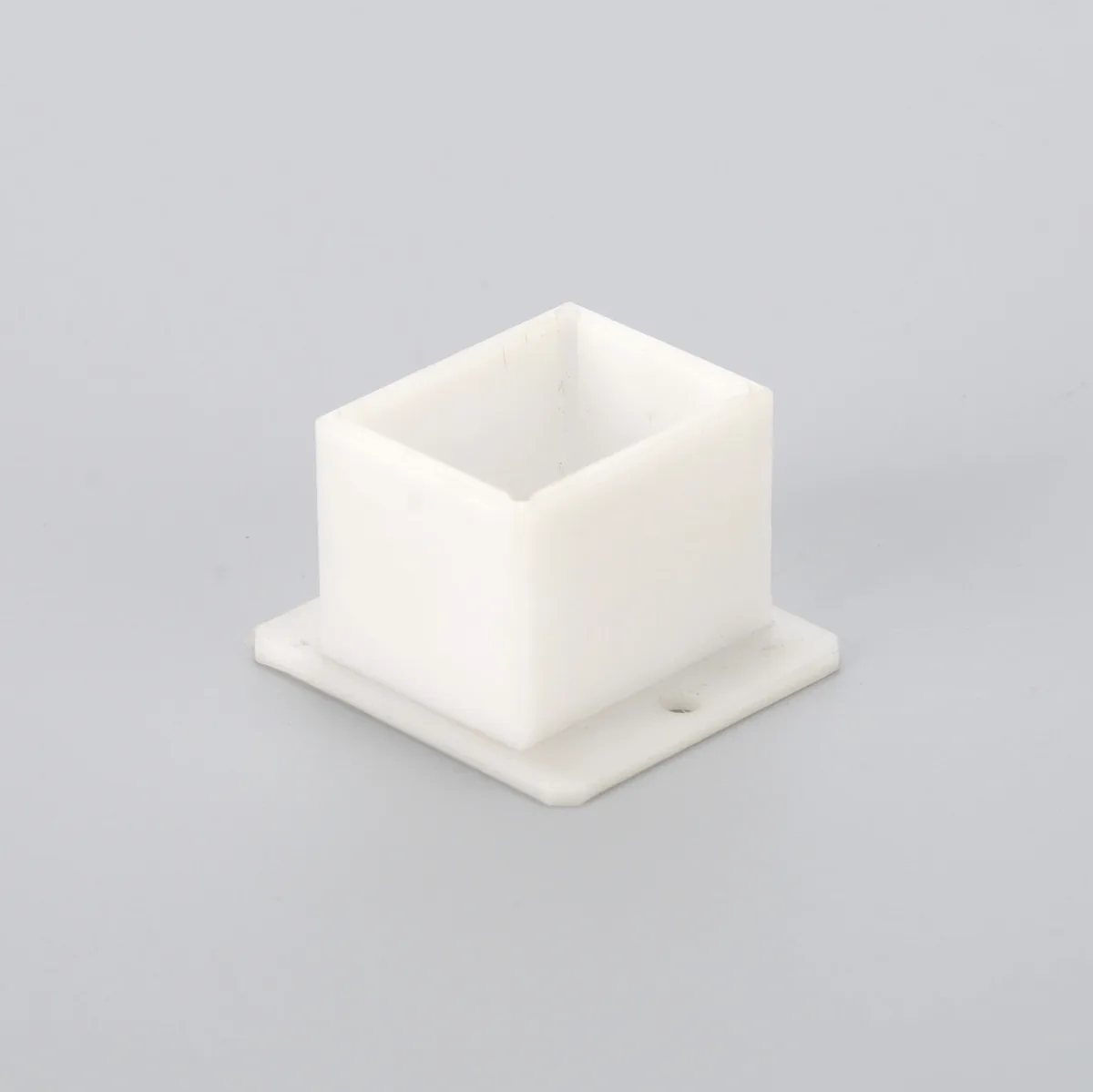
What is PTFE machining?
PTFE machining is the subtractive manufacture of parts from polytetrafluoroethylene sheet, plate, rod, tube, or molded stock using CNC mills, routers, lathes, drills, and controlled finishing processes. PTFE is selected for low friction, broad chemical resistance, electrical insulation, non-stick behavior, and service across demanding temperature environments.
PTFE is soft, has low stiffness, expands substantially with temperature, and can creep under sustained load. Accurate parts therefore depend on sharp tools, broad low-stress workholding, controlled temperature, stabilization before inspection, and realistic feature-specific tolerances.
Quick answer for buyers
PTFE machined parts are CNC-produced components made from virgin or filled polytetrafluoroethylene stock without mold tooling. Typical components include seals, gaskets, valve seats, bushings, electrical insulators, chemical-handling parts, wear rings, spacers, manifolds, and low-friction guides.
- Suitable for CNC milling, turning, drilling, and threading
- Available in virgin, glass-, carbon-, graphite-, and bronze-filled grades
- Best for chemical, sealing, electrical, and low-friction functions
- Material certificates and grade-specific compliance available by request
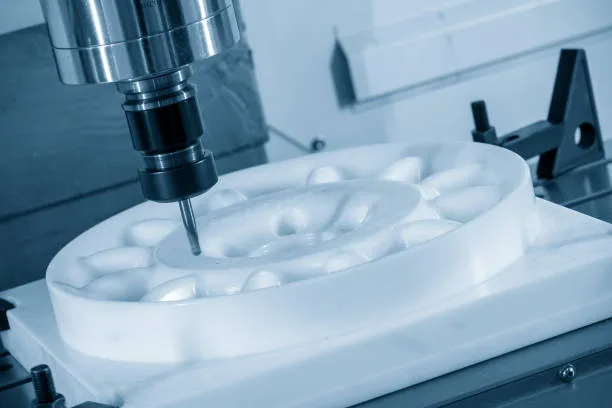
CNC processes for PTFE machined parts
Tool geometry, stock condition, workholding, cutting parameters, deburring, stabilization, and inspection are selected around grade, geometry, load, and functional surfaces.
CNC Milling
Pockets, slots, profiles, sealing faces, manifolds, hole patterns, and multi-sided features in PTFE plate or block.
CNC Turning
Seals, rings, sleeves, bushings, valve seats, spacers, rollers, and stepped diameters from rod or tube stock.
Drilling & Threading
Supported holes, counterbores, coarse threads, and inserts planned to manage deformation, burrs, and assembly load.
Finishing & Inspection
Controlled deburring, fine turning, polishing, lapping review, dimensional reports, certificates, and assembly by RFQ.
PTFE properties that affect machining and design
Values vary by resin, filler, stock supplier, manufacturing method, temperature, load, and test method. The approved material datasheet and customer drawing govern production.
| Characteristic | Design or Machining Relevance | Buyer Check |
|---|---|---|
| Very low friction | Useful for seals, slide surfaces, bushings, guides, and dry-running interfaces | Define mating material, pressure, speed, lubrication, and wear life |
| Broad chemical resistance | Supports components exposed to many acids, bases, solvents, and process fluids | Confirm exact chemicals, concentration, temperature, pressure, and duration |
| Wide grade-dependent temperature range | PTFE is used from cryogenic service to elevated temperatures | Use the selected grade datasheet under the actual load and environment |
| High thermal expansion | Dimensions change more with temperature than common metals or rigid plastics | State operating and inspection temperatures plus functional clearances |
| Creep / cold flow | Sustained load can change dimensions and sealing force over time | Define load, dwell time, pressure, support, and expected service life |
| Excellent electrical insulation | Useful for isolators, spacers, connectors, and high-purity electrical parts | Provide voltage, frequency, creepage, safety, and certification requirements |
Choosing virgin and filled PTFE grades
| PTFE Grade | Typical Advantage | Common Buyer Consideration |
|---|---|---|
| Virgin PTFE | Maximum chemical inertness, electrical insulation, and purity | Lowest stiffness and wear resistance; review creep and dimensional stability |
| Glass-Filled PTFE | Improved wear, stiffness, compressive behavior, and creep resistance | Confirm chemical compatibility and mating-surface wear |
| Carbon-Filled PTFE | Improved wear, thermal behavior, and performance in dynamic sealing | Electrical conductivity and application environment depend on formulation |
| Bronze-Filled PTFE | High wear resistance and compressive performance for loaded bearings | Heavier, conductive, and not appropriate for every chemical environment |
| Graphite / Specialty Filled | Application-specific friction, wear, temperature, or static behavior | Approve exact filler percentage, manufacturer, datasheet, and substitution rules |
PTFE cutting parameters and tooling guide
The ranges below are planning references, not fixed production settings. Machine rigidity, tool diameter, flute geometry, stock condition, filler, wall thickness, and surface requirement determine the final process.
| Operation | Starting Cutting-Speed Range | Starting Feed Reference | Process Focus |
|---|---|---|---|
| CNC Turning | 200–500 SFM | 0.002–0.010 in/rev | Sharp positive-rake tool, shallow finishing cut, stable temperature |
| CNC Milling | 300–600 SFM | 0.003–0.012 in/tooth | Polished carbide, effective chip removal, limited rubbing |
| Drilling | 150–400 SFM | 0.003–0.008 in/rev | Supported exits, peck cycle when needed, clear chips frequently |
| Threading | Feature-specific | Coarse pitch preferred | Allow adequate engagement; consider inserts for repeated assembly |
How we manage PTFE deformation, creep, burrs, and heat
Thermal Expansion
Temperature-controlled machining, stabilization before inspection, and drawing-defined inspection temperature help manage size changes.
Creep and Cold Flow
Functional clearances, supported geometry, filler selection, and load-specific review reduce long-term distortion risk.
Clamping Distortion
Soft jaws, broad contact, vacuum or custom fixtures, and moderate distributed pressure prevent deformation during cutting.
Burr Formation
Very sharp polished tools, supported exits, controlled edge breaks, and appropriate deburring protect holes and sealing edges.
Localized Heat
Moderate cutting speed, adequate feed, light passes, chip removal, and compatible cooling limit heat concentration.
Measurement Stability
Parts are allowed to relax after machining; critical dimensions are checked using the agreed fixture, temperature, and inspection plan.
PTFE machining tolerances and lead times
PTFE is softer and more temperature-sensitive than rigid engineering plastics. Apply tighter tolerances only where function requires them and define how and when the part is measured.
| Planning Level | Linear Tolerance Reference | Typical Control |
|---|---|---|
| Standard features | About ±0.13 mm | Normal CNC setup, controlled deburring, and inspection |
| Precision features | About ±0.08 mm | Stable stock, broad workholding, finishing pass, and temperature control |
| Eligible critical features | As tight as ±0.05 mm | Drawing review, stabilization or annealing review, and feature-specific inspection |
Common applications for PTFE machined parts
Seals & Gaskets
Valve seats, backup rings, packing, diaphragms, wear rings, and custom sealing elements.
Chemical Processing
Pump parts, valve components, liners, fittings, manifolds, and isolators after fluid compatibility review.
Semiconductor
High-purity fittings, insulators, wafer-handling components, chemical-delivery parts, and process fixtures.
Electrical Equipment
Insulators, bushings, spacers, connector components, cable guides, and high-voltage isolation parts.
Aerospace
Seals, bushings, wire guides, insulation components, and low-friction parts subject to grade validation.
Medical & Laboratory
Fluid-contact parts, instrument components, fixtures, and documented grade-specific components.
Food Equipment
Guides, seals, scrapers, spacers, and non-stick components made from specifically documented grades.
Automation
Slide pads, bushings, guides, sensor supports, fixtures, and replacement machine components.
DFM guidelines for CNC machined PTFE
Wall Thickness
Avoid unsupported thin walls and broad flat areas. Around 1.5 mm is a practical starting point for virgin PTFE, subject to geometry.
Corner Radii
Add practical internal radii so rigid tools can be used and local stress or tearing is reduced.
Threads
Prefer coarse threads with generous engagement and consider metal inserts for repeated assembly or higher torque.
Fits and Temperature
Define functional datums, operating temperature, inspection temperature, mating conditions, and long-term load.
Surface finish options for PTFE CNC parts
As Machined
Functional surfaces with controlled tool marks, deburring, and drawing-defined edge breaks.
Fine Turning
Controlled finishing cuts for sealing diameters, bearing interfaces, and improved surface quality.
Polishing / Lapping Review
Selected sealing or fluid-contact surfaces can be reviewed for lower roughness where geometry permits.
Controlled Deburring
Manual, mechanical, or specialized low-temperature methods are selected around part geometry and cleanliness.
Marking & Traceability
Packaging labels, lot control, and marking trials may be provided when the selected grade and surface allow.
Dimensional Reporting
First-article inspection, critical-dimension reports, material certificates, and inspection plans by RFQ.
PTFE vs. PEEK, Delrin, nylon, and UHMWPE
| Material | Key Strength | Main Buyer Consideration |
|---|---|---|
| PTFE | Chemical resistance, very low friction, electrical insulation, wide temperature capability | Low stiffness, creep, and high thermal expansion require realistic tolerances and support |
| PEEK | High strength, stiffness, wear resistance, and elevated-temperature performance | Higher material cost; choose when structural loading dominates |
| Delrin / POM-H | Good stiffness, dimensional stability, fatigue resistance, and machinability | Lower temperature and chemical range than PTFE in many environments |
| Nylon | Toughness, wear performance, and broad grade availability | Moisture absorption can influence dimensions and properties |
| UHMWPE | Impact, abrasion, low friction, and economical large wear components | Lower temperature capability and stiffness; close tolerances can be difficult |
PTFE machining FAQs
What is PTFE machining?
PTFE machining uses CNC milling, turning, drilling, threading, and finishing to produce custom parts from virgin or filled polytetrafluoroethylene stock. It is used for seals, gaskets, bushings, electrical insulators, chemical-handling parts, and low-friction components.
Is PTFE the same as Teflon?
PTFE is the generic material name. Teflon is a trademark associated with specific Chemours fluoropolymer products. If a branded resin is mandatory, identify the manufacturer and grade on the drawing or RFQ.
What tolerances can CNC machined PTFE hold?
Standard dimensions may be planned around ±0.13 mm, precision features around ±0.08 mm, and eligible critical features as tight as ±0.05 mm after drawing and process review. Size, wall thickness, stock stress, temperature, filler, and inspection method determine confirmed capability.
What is the lead time for PTFE machined parts?
Eligible prototypes may start from 3–5 business days after approval. Stock grade, filler, quantity, geometry, tight tolerances, stabilization, finishing, inspection, certificates, packaging, and destination affect the confirmed schedule.
Which PTFE grade should I choose?
Virgin PTFE is a common choice for chemical purity and electrical insulation. Glass-filled grades improve wear and creep resistance, carbon-filled grades can suit dynamic sealing, and bronze-filled grades can suit heavily loaded wear parts. Final selection depends on fluid, load, speed, temperature, mating material, and documentation.
Why is PTFE difficult to machine accurately?
PTFE is soft, expands significantly with temperature, conducts heat poorly, and can creep under load. Sharp tools, low-stress workholding, temperature control, stabilization, appropriate fillers, and feature-specific inspection help manage these behaviors.
Can PTFE parts be threaded?
Yes. Coarse threads and generous engagement are usually preferred. Metal inserts may be appropriate for repeated assembly, higher torque, or better repairability.
What files should I send for a quote?
Send a STEP or IGES model and a PDF drawing showing grade and filler, quantity, datums, critical tolerances, sealing surfaces, operating and inspection temperature, finish, threads or inserts, certificates, and requested delivery date.
Ready to quote custom PTFE machined parts?
Upload your CAD model and drawing with the PTFE grade, filler, quantity, critical tolerances, sealing surfaces, finish, inspection, certificates, and requested delivery date.
Explore our CNC machining services, compare Delrin CNC machining, HDPE machining, polycarbonate machining, and ABS CNC machining, or contact our team.