Polycarbonate Machining Services
Custom CNC milling, turning, drilling, and finishing for transparent and opaque polycarbonate parts. Eligible critical features can be reviewed to tolerances as tight as ±0.05 mm, with prototype lead times starting from 3–5 business days after drawing, material, quantity, finish, and inspection review.
What is polycarbonate machining?
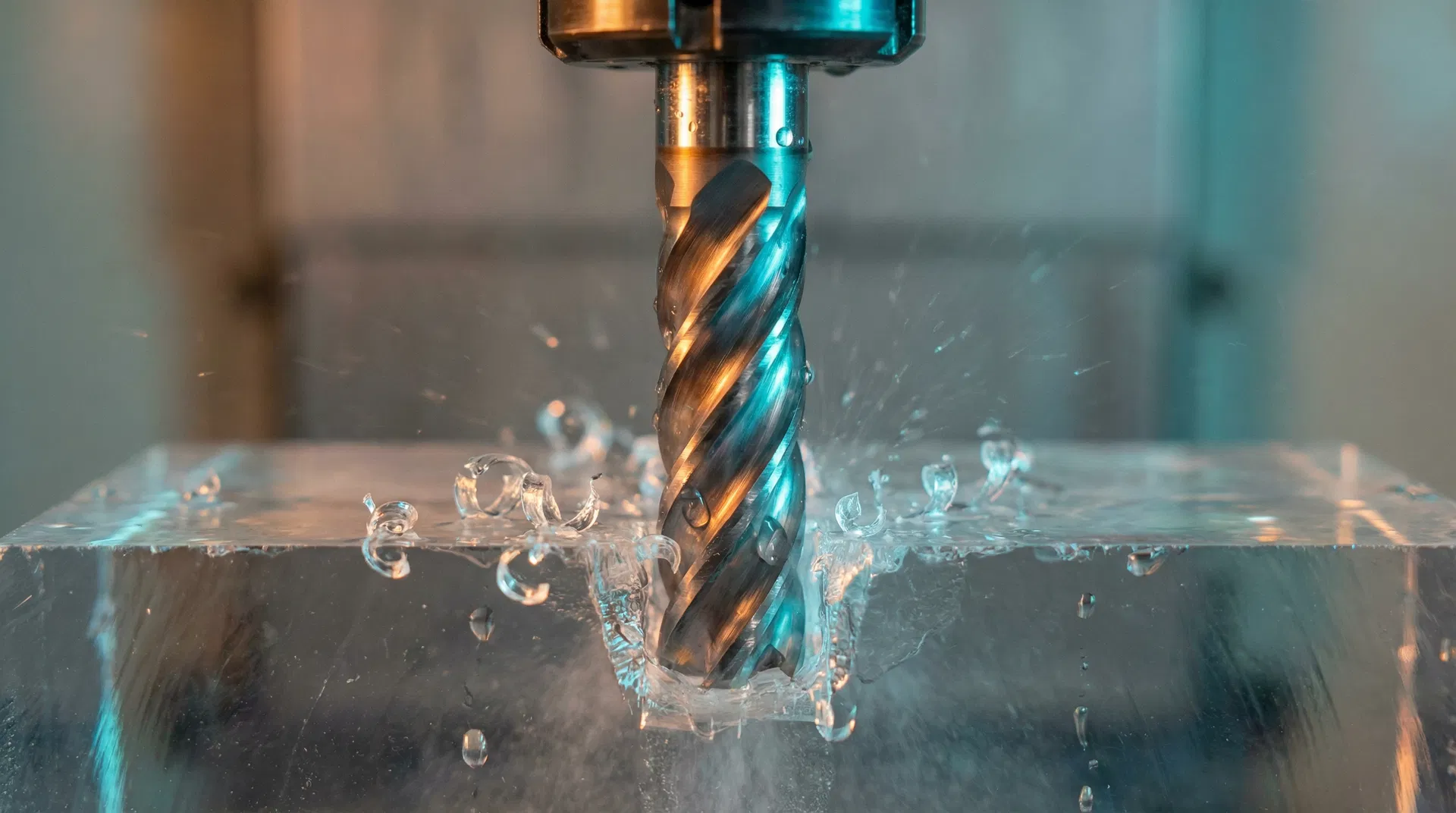
Polycarbonate machining is the subtractive manufacture of parts from PC sheet, plate, rod, tube, or block using CNC mills, routers, lathes, drills, and carefully controlled finishing processes. The material is chosen when a component needs high impact strength, useful optical clarity, electrical insulation, and better resistance to breakage than acrylic.
Successful machining depends on sharp tools, reliable chip evacuation, low-stress workholding, and heat control. Excessive rubbing can soften the polymer, smear edges, create haze, or release internal stock stress.
Quick answer for buyers
CNC machined polycarbonate parts are custom components cut from certified or commercially specified PC stock without mold tooling. They are commonly selected for machine guards, inspection windows, transparent covers, electrical insulators, fluid-handling components, optical housings, fixtures, and impact-resistant prototypes.
- Suitable for 3-axis, 4-axis, and 5-axis milling
- Turning available for rod and tube geometries
- Clear, black, UV-stabilized, flame-retardant, and ESD grades by request
- Material certificates and inspection reports available when specified
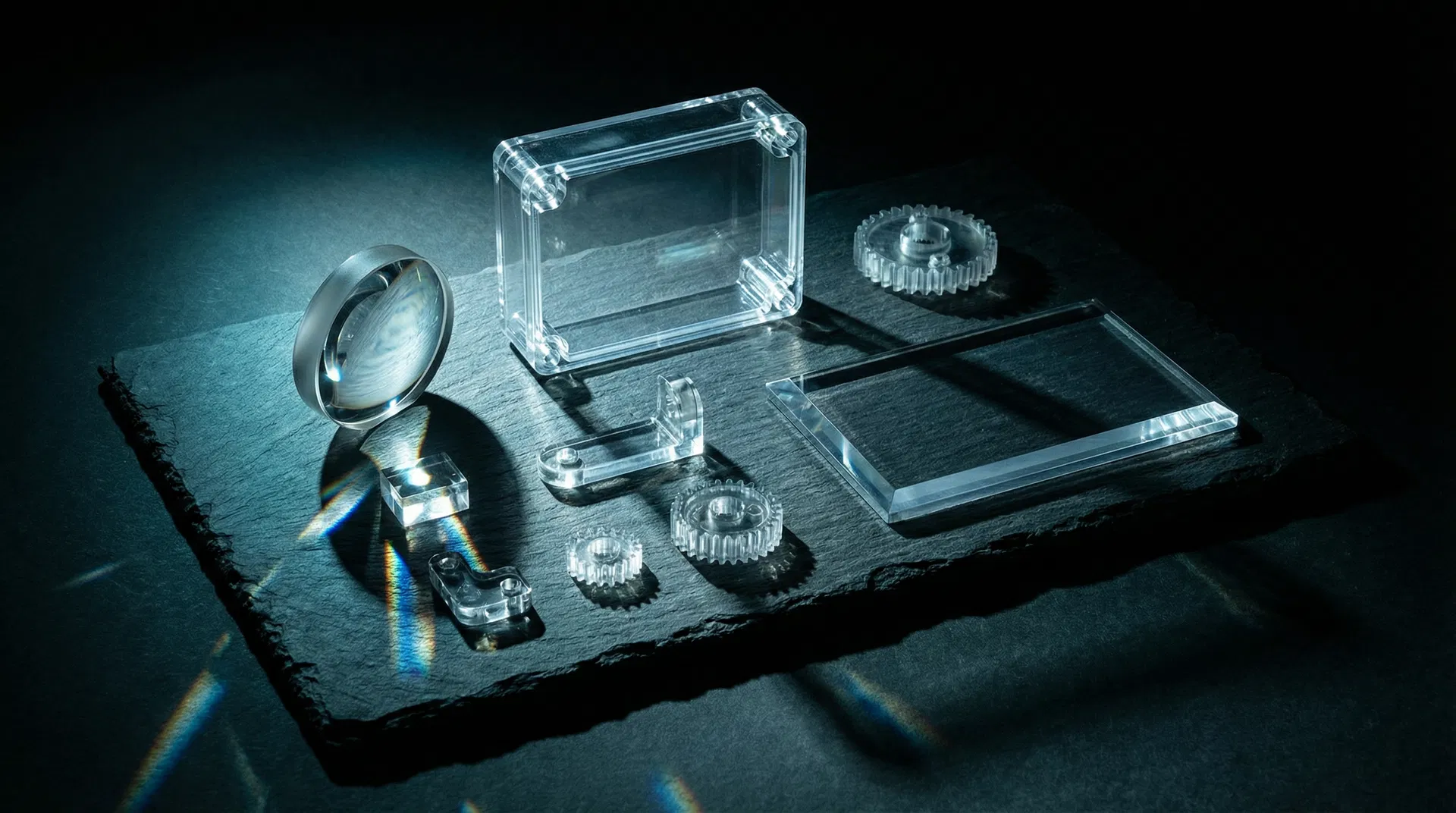
CNC processes for polycarbonate parts
Tool geometry, workholding, cutting parameters, coolant compatibility, and inspection are selected around part thickness, grade, stock stress, and functional surfaces.
CNC Milling
Pockets, slots, profiles, sealing faces, hole patterns, and multi-sided features in PC sheet, plate, or block.
CNC Turning
Clear sleeves, spacers, rings, rollers, bushings, lens housings, and stepped diameters from rod or tube.
Drilling & Threading
Supported drilling, counterbores, tapped holes, and inserts planned to reduce breakout, heat, and assembly stress.
Polishing & Assembly
Mechanical or vapor-polishing review, marking, inserts, hardware, dimensional reports, and assembly when specified.
Polycarbonate properties and grade selection
Typical values vary by resin grade, color, additives, stock supplier, thickness, conditioning, and test method. The approved material datasheet and customer drawing govern production.
| Property or Grade | Machining / Design Relevance | Buyer Check |
|---|---|---|
| High impact strength | Useful for guards, covers, housings, and parts exposed to accidental impact | Define impact energy, temperature, thickness, and safety standard |
| Optical transmission | Clear grades can support windows, light guides, and visual inspection features | Specify acceptable haze, clarity, polish area, and cosmetic standard |
| Heat sensitivity | Rubbing or poor chip evacuation can soften and smear the cut surface | Identify thin walls, deep pockets, and heat-sensitive cosmetic faces |
| General-purpose clear PC | Common starting point for transparent prototypes and functional parts | Confirm UV exposure, flame rating, certificates, and stock thickness |
| Black or opaque PC | Used for housings, light control, appearance, and structural components | Do not select by color alone; confirm manufacturer and grade |
| UV / FR / ESD grades | Application-specific weathering, flame, or static-dissipative behavior | State the required rating and request supporting documentation |
How we control heat, stress, haze, and edge quality
Heat and Melting
Sharp polished tools, adequate feed, controlled engagement, and efficient chip removal reduce rubbing, edge fusion, and surface smearing.
Internal Stock Stress
Balanced stock removal, staged roughing and finishing, stabilization time, and annealing review help manage dimensional movement.
Clamping Distortion
Broad support and low-stress workholding reduce deformation in thin sheets, large windows, and flexible walls.
Cracking and Crazing
Compatible coolants and cleaning agents are essential because unsuitable solvents can initiate stress cracking or fine crazing.
Chips and Scratches
Air, vacuum, or compatible coolant moves chips away before they are recut across transparent cosmetic surfaces.
Optical Surfaces
Toolpath direction, finishing allowance, protection film, polishing sequence, and inspection lighting are agreed before production.
Polycarbonate machining tolerances and lead times
Use practical tolerances on non-critical geometry and reserve tighter controls for datums, sealing faces, optical interfaces, hole patterns, and assembly fits.
| Planning Level | Linear Tolerance Reference | Typical Control |
|---|---|---|
| Standard features | About ±0.20 mm | Normal CNC setup, deburring, and inspection |
| Precision features | About ±0.10 mm | Stable stock, low-stress fixturing, finishing pass, and defined datums |
| Eligible critical features | As tight as ±0.05 mm | Drawing review, stress/thermal control, and feature-specific inspection |
Common CNC machined polycarbonate applications
Machine Safety
Guards, doors, inspection windows, shields, covers, barriers, and protective enclosures.
Optical & Lighting
Light guides, diffusers, display covers, optical housings, viewing ports, and prototype lenses.
Medical & Laboratory
Instrument windows, housings, reservoirs, fixtures, guards, and documented grade-specific components.
Electronics
Insulators, terminal covers, clear housings, display bezels, test fixtures, and ESD-grade components.
Aerospace & Mobility
Transparent covers, interior components, sensor guards, light housings, and test prototypes.
Fluid Handling
Manifolds, reservoirs, sight windows, pump covers, and fittings after chemical compatibility review.
Automation
Robot guards, nests, grippers, sensor mounts, vision-system covers, and replacement machine parts.
Product Development
Functional prototypes, appearance models, bridge production, validation fixtures, and design iterations.
DFM guidelines for CNC machined polycarbonate
Wall Thickness
Avoid unsupported thin walls and broad flat areas that can vibrate or distort under clamping and cutting forces.
Internal Corners
Add practical radii so larger, more rigid tools can be used and local stress concentration is reduced.
Threads & Inserts
Provide adequate engagement and consider inserts for repeated assembly, higher torque, or repairability.
Optical Callouts
Separate dimensional, surface roughness, haze, clarity, scratch-dig, and cosmetic requirements on the drawing.
Finishing options for machined polycarbonate
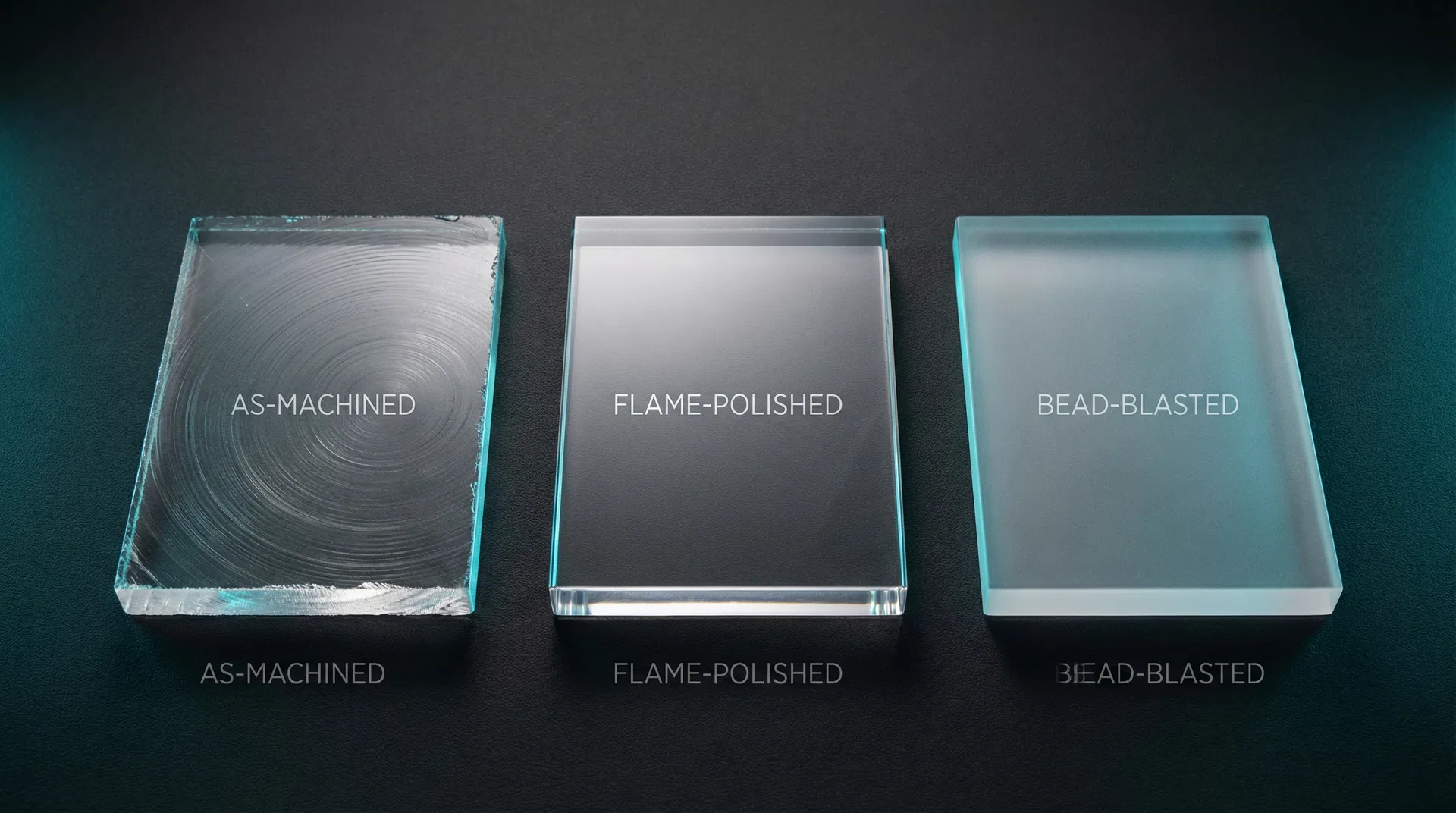
As Machined
Functional machined surfaces with controlled tool marks, deburring, and drawing-defined edge breaks.
Mechanical Polishing
Progressive abrasive finishing can improve selected surfaces and edges when geometry allows access.
Vapor Polishing Review
Optical improvement may be possible on compatible grades and geometries after process and stress review.
Frosted / Matte
Controlled blasting or surface texturing can reduce glare and create a diffuse cosmetic finish.
Protective Hard Coat
Scratch-resistant coatings can be reviewed with the coating supplier, optical requirement, and service exposure.
Marking & Assembly
Laser marking trials, inserts, hardware, subassembly, dimensional reports, and certificates by RFQ.
Polycarbonate vs. acrylic for CNC machining
| Decision Factor | Polycarbonate (PC) | Acrylic (PMMA) |
|---|---|---|
| Impact resistance | Usually preferred for guards and impact-prone parts | More brittle and more sensitive to chipping or cracking |
| Optical appearance | Good transparency; finishing and grade affect haze | Often preferred for maximum clarity and gloss |
| Machining behavior | Tough and forgiving, but heat can cause smearing | Cuts cleanly but requires careful crack and chip control |
| Scratch resistance | Softer surface; hard coating may be considered | Generally better surface hardness |
| Typical choice | Machine guards, safety covers, durable housings | Displays, optical covers, signage, appearance parts |
Polycarbonate machining FAQs
Can polycarbonate be CNC machined?
Yes. Polycarbonate sheet, plate, rod, tube, and block can be milled, routed, turned, drilled, and finished. Sharp tools, chip evacuation, heat control, and low-stress workholding are important for clean edges and stable dimensions.
What tolerances can CNC machined polycarbonate hold?
Standard features may be planned around ±0.20 mm, precision features around ±0.10 mm, and eligible critical features as tight as ±0.05 mm after drawing and process review. Geometry, stock stress, wall thickness, temperature, and inspection method determine confirmed capability.
What is the lead time for polycarbonate parts?
Eligible prototypes may start from 3–5 business days after approval. Grade and stock availability, quantity, geometry, optical finishing, annealing, certificates, inspection, packaging, and destination affect the confirmed schedule.
Is polycarbonate easier to machine than acrylic?
Polycarbonate is tougher and less likely to crack, but it is more prone to heat-related melting or smearing. Acrylic can produce excellent optical surfaces but is more brittle. The better choice depends on impact, clarity, scratch resistance, temperature, and cost requirements.
How do you keep polycarbonate clear after machining?
Use sharp polished tools, prevent chip recutting, protect cosmetic faces, minimize heat, and leave controlled finishing allowance. Mechanical or vapor polishing may improve clarity, subject to grade, geometry, stress, and validation.
Which polycarbonate grades can be machined?
General-purpose clear and black grades are common. UV-stabilized, flame-retardant, glass-filled, food-contact, medical, and ESD grades may also be available. Specify the exact grade and required documentation in the RFQ.
Can polycarbonate be threaded?
Yes, but thread engagement, repeated assembly, torque, and edge distance must be considered. Metal inserts may be preferred for repeated assembly or higher loads.
What files should I send for a quote?
Send a STEP or IGES model and a PDF drawing showing grade, color, quantity, datums, critical tolerances, optical zones, finish, threads or inserts, inspection, certificates, and requested delivery date.
Ready to quote CNC machined polycarbonate parts?
Upload your CAD model and drawing with the PC grade, color, quantity, critical tolerances, optical requirements, finish, inspection, certificates, and requested delivery date.
Explore our CNC machining services, compare acrylic CNC machining, ABS CNC machining, HDPE machining, and Delrin machining, or contact our team.