ABS CNC Machining Services
Custom CNC milling and turning for ABS prototypes, fixtures, enclosures, and production parts. Eligible critical features can reach tolerances as tight as ±0.05 mm, with prototype lead times from 3–5 business days after drawing, material, quantity, finish, and inspection review.
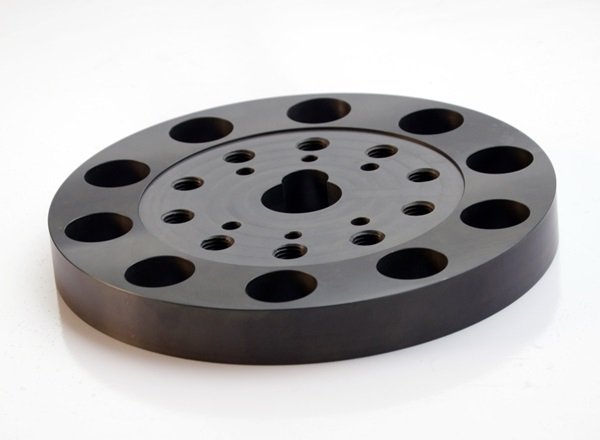
What is ABS plastic CNC machining?
ABS—acrylonitrile butadiene styrene—is an engineering thermoplastic selected for its balance of toughness, rigidity, impact resistance, dimensional stability, appearance, and cost. CNC machining removes material from ABS sheet, plate, rod, or suitable stock to create accurate functional parts without injection-molding tooling.
ABS is commonly considered for housings, bezels, brackets, covers, fixtures, prototypes, and low-volume end-use components. Machining is especially useful when the design is changing, volumes do not justify a mold, or functional dimensions and surface requirements must be checked before production tooling.
- One-off prototypes, bridge quantities, and repeat orders
- Milled and turned features, threads, bores, pockets, and multi-face geometry
- Drawing-based review of grade, wall thickness, tolerances, finish, and inspection
Why CNC machine ABS?
CNC machining can deliver isotropic stock-material behavior, close dimensional control, and clean functional features without the mold investment required by injection molding.
- Suitable for low and medium volumes
- Fast design revisions between batches
- Good electrical insulation
- Accepts painting, bonding, texturing, and selected finishing
- Available in black, natural, white, and supplier-specific colors
ABS CNC machining capabilities
Machining strategy and achievable results depend on part size, wall thickness, feature access, stock condition, finish, quantity, and inspection plan.
CNC Milling
Pockets, profiles, ribs, slots, bores, mounting patterns, and multi-face enclosure geometry.
CNC Turning
Bushings, rollers, sleeves, spacers, collars, and other rotational ABS components.
Multi-Axis Machining
Reduced setups for complex angles, compound surfaces, and related features across several faces.
Drilling & Threading
Hole, thread, insert, and assembly strategies reviewed around load, heat, and repeated use.
| Decision Item | Reference Capability | What Must Be Reviewed |
|---|---|---|
| Precision tolerance | As tight as ±0.05 mm (±0.002 in) for eligible critical features | Feature size, wall thickness, datum scheme, temperature, finish, and inspection method |
| Prototype lead time | From 3–5 business days for eligible projects | Stock availability, quantity, setups, finishing, inspection, and production schedule |
| Typical surface finish | As-machined Ra 1.6–3.2 μm where geometry allows | Tool access, grade, cutter path, cosmetic surfaces, and secondary finish |
| Order quantity | Prototype through repeat production | Part geometry, cycle time, fixture plan, material yield, and annual demand |
ABS material properties for CNC machining
The values below are typical general-purpose ABS reference ranges. Use the selected supplier data sheet and drawing specification for design approval.
| Property | Typical Reference | Design Relevance |
|---|---|---|
| Density | Approximately 1.02–1.05 g/cm³ | Lightweight housings and functional components |
| Tensile strength | Approximately 40–44 MPa | Grade, temperature, and stock direction influence performance |
| Flexural modulus | Approximately 2.1–2.4 GPa | Useful for stiffness and wall-deflection estimates |
| Heat deflection behavior | Grade-dependent; often near 85–100°C under specified load | Review service temperature and heat generated during machining |
| Water absorption | Low but not zero | Conditioning and environment can influence precision dimensions |
| Electrical behavior | Generally insulating | Useful for covers, housings, supports, and nonconductive fixtures |
Selecting the right ABS grade
Choose the grade around impact, flame performance, stiffness, UV exposure, color, regulatory documentation, and supplier availability.
General-Purpose ABS
Balanced toughness, rigidity, machinability, and cost for prototypes, enclosures, covers, and fixtures.
Flame-Retardant ABS
Supplier-certified grades may support electrical or interior applications requiring a stated flame rating.
Glass-Filled ABS
Higher stiffness and dimensional stability, with increased tool wear and different edge-finish behavior.
High-Impact ABS
Considered where repeated handling, knocks, or mechanical shock require greater toughness.
UV-Stabilized ABS
Selected for improved outdoor durability compared with standard ABS, subject to environment and exposure.
Application-Specific Grades
Medical, low-smoke, antistatic, or custom-color grades require supplier documentation and project review.
Applications for CNC machined ABS parts
ABS is commonly evaluated for functional components that need impact resistance, electrical insulation, clean appearance, and economical low-volume production.
Automotive & Mobility
Interior prototypes, trim, bezels, switch housings, brackets, covers, and validation parts.
Electronics
Enclosures, connector housings, front panels, bezels, insulation components, and test fixtures.
Medical & Laboratory
Non-implant housings, instrument covers, diagnostic equipment parts, and lab fixtures using documented grades.
Industrial Equipment
Jigs, assembly aids, machine guards, protective covers, templates, and handling components.
Aerospace Interiors
Non-structural interior prototypes and components where the specified grade meets the required documentation.
Product Development
Functional prototypes, ergonomic models, pilot builds, and bridge parts before injection molding.
From CAD file to finished ABS parts
A controlled workflow connects material selection, geometry, tolerance, finish, inspection, quantity, and delivery requirements.
Surface finishes for ABS CNC machined parts
Select the finish around appearance, texture, bonding, marking, chemical exposure, assembly, and dimensional allowance.
As Machined
Visible cutter paths; the fastest option for functional and non-cosmetic components.
Bead Blasting
A matte texture may be produced on suitable ABS grades with controlled media and parameters.
Painting
Color, gloss, branding, or protective coating after compatible cleaning and surface preparation.
Vapor Smoothing
Specialist processing can reduce tool marks on compatible grades; dimensional change must be reviewed.
Texturing & Polishing
Manual and mechanical finishing for cosmetic surfaces, edges, or controlled texture.
Bonding & Inserts
Threaded inserts, adhesive bonding, marking, and assembly can be planned as secondary operations.
DFM guidelines for ABS CNC machining
Wall thickness
Avoid unsupported thin walls. Around 1.5 mm or more is generally easier to machine, although local features may be reviewed individually.
Internal radii
Use practical corner radii so stronger end mills can reach internal geometry without excessive tool extension.
Deep pockets
Limit deep, narrow cavities where cutter reach, chip evacuation, heat, vibration, and inspection become difficult.
Threads & inserts
Review engagement, assembly cycles, service load, and whether metal inserts are appropriate.
Tight tolerances
Apply close tolerances only to functional interfaces and define datums, inspection points, and operating temperature.
Workholding
Provide stable gripping areas where possible; thin or cosmetic faces may need soft jaws or custom fixtures.
Managing heat, warping, finish, and tool pressure
ABS machines well, but thermal sensitivity and flexibility can affect thin walls, deep features, and cosmetic surfaces.
Heat build-up
Sharp tooling, appropriate chip load, air or compatible coolant, and efficient chip evacuation reduce softening and re-cutting.
Warping
Balanced stock removal, staged roughing and finishing, stable workholding, and material conditioning help control movement.
Surface quality
Polished cutters, controlled step-over, climb milling where appropriate, and a dedicated finish pass improve appearance.
Part distortion
Soft jaws, vacuum fixtures, sacrificial tabs, and distributed clamping can protect thin or cosmetic components.
ABS CNC machining vs. alternative methods
| Factor | ABS CNC Machining | Injection Molding | FDM 3D Printing |
|---|---|---|---|
| Tooling investment | No production mold | Production tooling required | No mold |
| Best-fit volume | Prototype to low/medium volume | Medium to high volume after design freeze | Prototype and low volume |
| Dimensional control | Close tolerances on reviewed features | Repeatable after tooling validation | Layer and orientation dependent |
| Material behavior | Machined from solid stock | Molded thermoplastic behavior | Layered, direction-dependent behavior |
| Design revisions | Update CAM and drawing | May require tool modification | Update print file |
| Surface condition | Machined finish with secondary options | Mold-defined finish | Layer lines unless post-processed |
ABS CNC machining FAQs
What tolerances can you achieve on ABS CNC parts?
Eligible critical features can reach tolerances as tight as ±0.05 mm (±0.002 in). Achievable tolerance depends on grade, stock condition, feature size, wall thickness, datum scheme, temperature, finishing, and inspection method. Final capability is confirmed after drawing review.
What is the lead time for CNC machined ABS parts?
Eligible prototypes can start from 3–5 business days after order approval. The confirmed schedule depends on stock availability, quantity, complexity, finishing, inspection, packaging, and current production capacity.
Which ABS grades can be machined?
Options may include general-purpose, high-impact, flame-retardant, glass-filled, UV-stabilized, antistatic, and application-specific ABS. Availability and supporting documentation are confirmed during quotation.
Is ABS suitable for tight-tolerance parts?
Yes for many applications, but ABS expands with temperature and can move after material removal. Tight dimensions should be limited to functional features and paired with a datum and inspection plan.
Can ABS parts be painted or textured?
Yes. Suitable parts may be painted, bead blasted, polished, textured, marked, bonded, or vapor smoothed. Compatibility, cosmetic faces, masked areas, and dimensional allowance should be defined before production.
What files should I send for a quote?
Send a STEP or IGES model plus a PDF drawing showing ABS grade, color, quantity, critical dimensions and datums, threads or inserts, surface finish, inspection requirements, and requested delivery date.
When should I choose CNC machining instead of injection molding?
CNC machining is attractive for prototypes, changing designs, low or medium volumes, and parts that do not justify a mold. Injection molding is usually evaluated when the design is stable and production volume can support tooling investment.
Ready to quote custom ABS CNC parts?
Upload the CAD model and drawing with grade, color, quantity, critical tolerances, finish, inspection, and requested delivery date.
Explore our CNC machining services, compare acrylic CNC machining, review bead blasting, or contact our team.