Acrylic CNC Machining Services
Turn clear, cast, or extruded PMMA into accurate prototypes and production parts with CNC milling, turning, routing, drilling, engraving, and finishing support. Standard machining tolerance is typically ±0.05 mm, with precision capability as tight as ±0.005 mm. Eligible projects can start from 3 business days, subject to design and material review.
Clear, accurate acrylic parts without unnecessary heat damage
Acrylic CNC machining is a subtractive process that shapes PMMA sheet, plate, rod, or tube from CAD data. Compared with heat-intensive cutting methods, CNC machining supports pockets, threads with inserts, bores, channels, contours, and three-dimensional features while giving engineers more control over dimensions and edge quality.
Our team supports prototypes and production parts for customers who need transparent, lightweight, UV-stable components with a professional appearance.
- 3-axis and 5-axis milling for flat and complex components
- CNC turning for round acrylic parts, tubes, and optical-style forms
- Routing, drilling, engraving, polishing, and stress-relief options
- DFM review before production to reduce cracking, melting, and rework risk
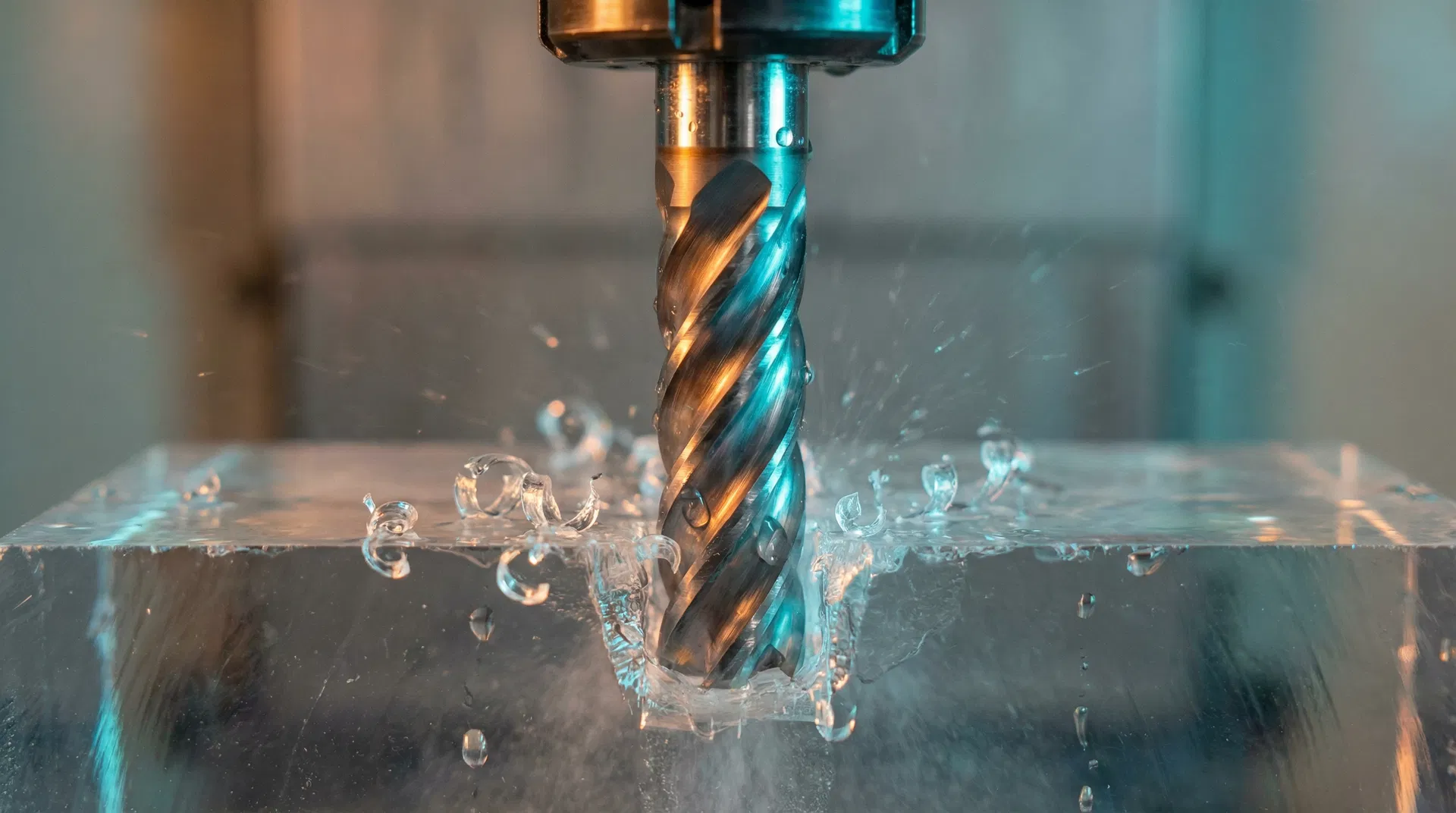
Cast vs extruded acrylic for CNC machining
Both PMMA types can be machined, but their manufacturing routes influence clarity, thickness consistency, stress behavior, and cutting response.
| Selection Factor | Cast Acrylic | Extruded Acrylic |
|---|---|---|
| Machining behavior | Usually cleaner cutting with lower melting tendency | Requires tighter control of heat and chip evacuation |
| Optical appearance | Often preferred for clear display and optical-style parts | Good clarity for general covers and panels |
| Thickness consistency | May vary more across a sheet | Typically more uniform |
| Stress sensitivity | Generally more forgiving during machining | Can retain higher internal stress |
| Typical use | Lenses, light guides, premium displays, precision parts | Guards, signage, panels, general enclosures |
| Cost position | Usually higher | Usually more economical |
Acrylic CNC machining methods
The best process depends on stock form, geometry, cosmetic requirement, and quantity.
CNC Milling
Pockets, profiles, slots, holes, channels, and three-dimensional surfaces using 3-axis or 5-axis machining.
CNC Turning
Round parts, rings, bushings, rods, tubes, and rotational features with controlled concentricity.
CNC Routing
Efficient processing of acrylic sheet for guards, panels, signage, display components, and covers.
Drilling & Engraving
Clean holes, identification marks, scales, text, logos, and detailed decorative features.
| Buyer Reference | Standard Capability | Higher-Priority Option |
|---|---|---|
| Machining tolerance | Typically ±0.05 mm | As tight as ±0.005 mm with specialized setup and tooling |
| Lead time | Quoted after material and drawing review | Eligible projects can start at 3 business days; many fast projects are 3–5 business days |
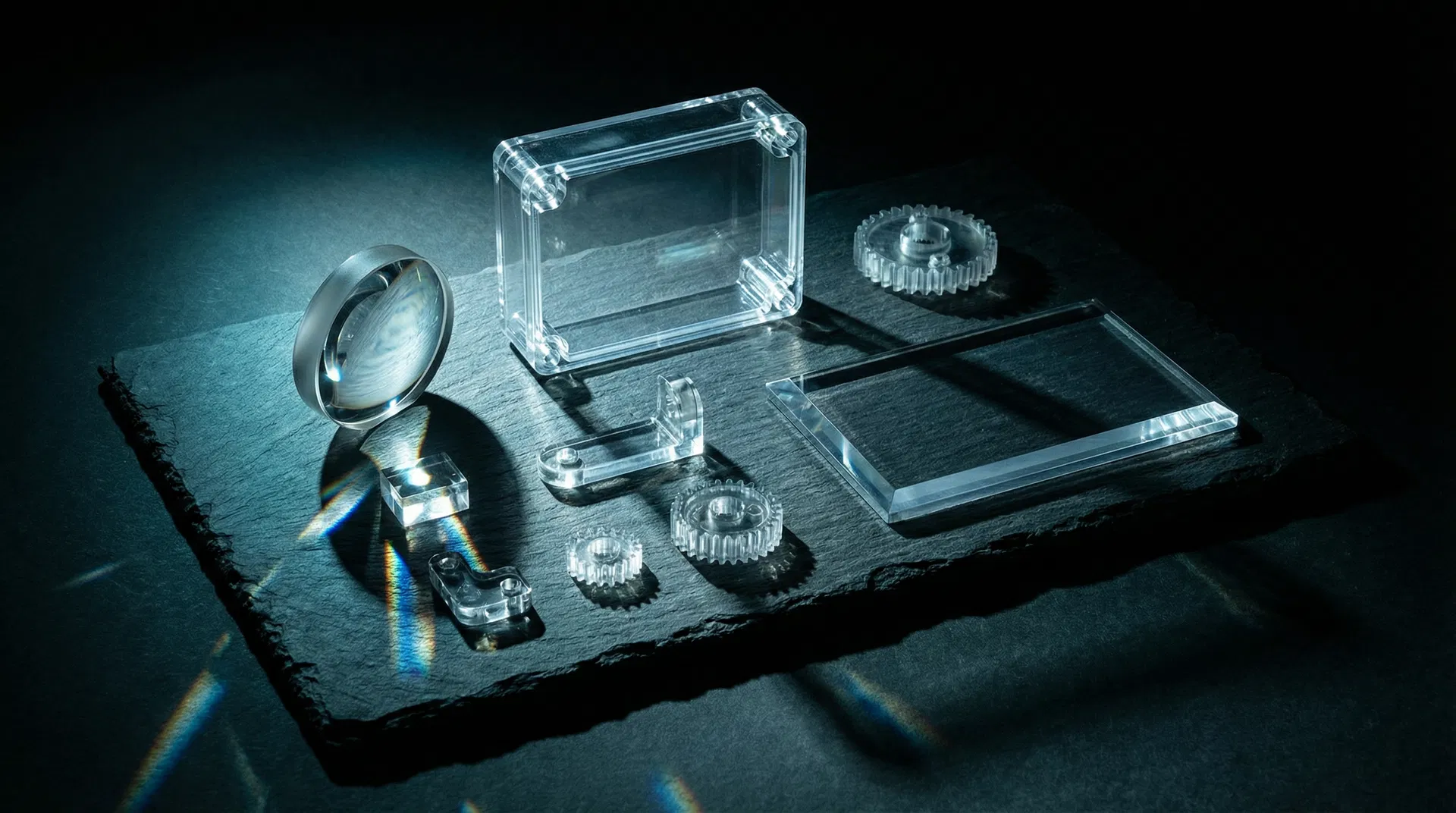
Tooling and heat control matter
Acrylic is sensitive to rubbing and heat. Sharp, polished carbide tools, suitable chip load, climb milling where appropriate, and a consistent air blast help prevent re-welded chips, frosted edges, and local cracking.
- O-flute carbide tools for efficient chip removal
- Rigid workholding that supports the part without marking it
- Finishing passes selected for visible or optical-style surfaces
- Annealing review for parts with high stress or demanding post-processing
Design guidelines for CNC machined acrylic
Good geometry reduces stress concentration, improves surface quality, and lowers machining time. Values below are practical starting points; final limits depend on part size, grade, and feature relationships.
| Feature | Practical Starting Point | Design Reason |
|---|---|---|
| Wall thickness | Prefer 1.5 mm or more; increase for large unsupported walls | Thin walls can vibrate, distort, or crack |
| Internal corners | Add a radius that matches a standard end mill | Reduces stress concentration and machining time |
| Deep pockets | Keep depth-to-width moderate where possible | Improves tool access, chip removal, and wall quality |
| Threads | Use metal inserts for repeated assembly | Direct acrylic threads are easier to strip or crack |
| Engraving | Use shallow, consistent depths | Limits weak points and improves cosmetic consistency |
| Tolerances | Apply tight tolerances only to functional features | Avoids unnecessary setup, inspection, and cost |
Share the end use
Tell us whether the part is optical, cosmetic, structural, protective, or fluid-handling.
Mark critical features
Identify mating dimensions, surface zones, datum structure, and inspection requirements.
Specify finish clearly
Define which faces need clarity, a polished edge, a matte appearance, or as-machined texture.
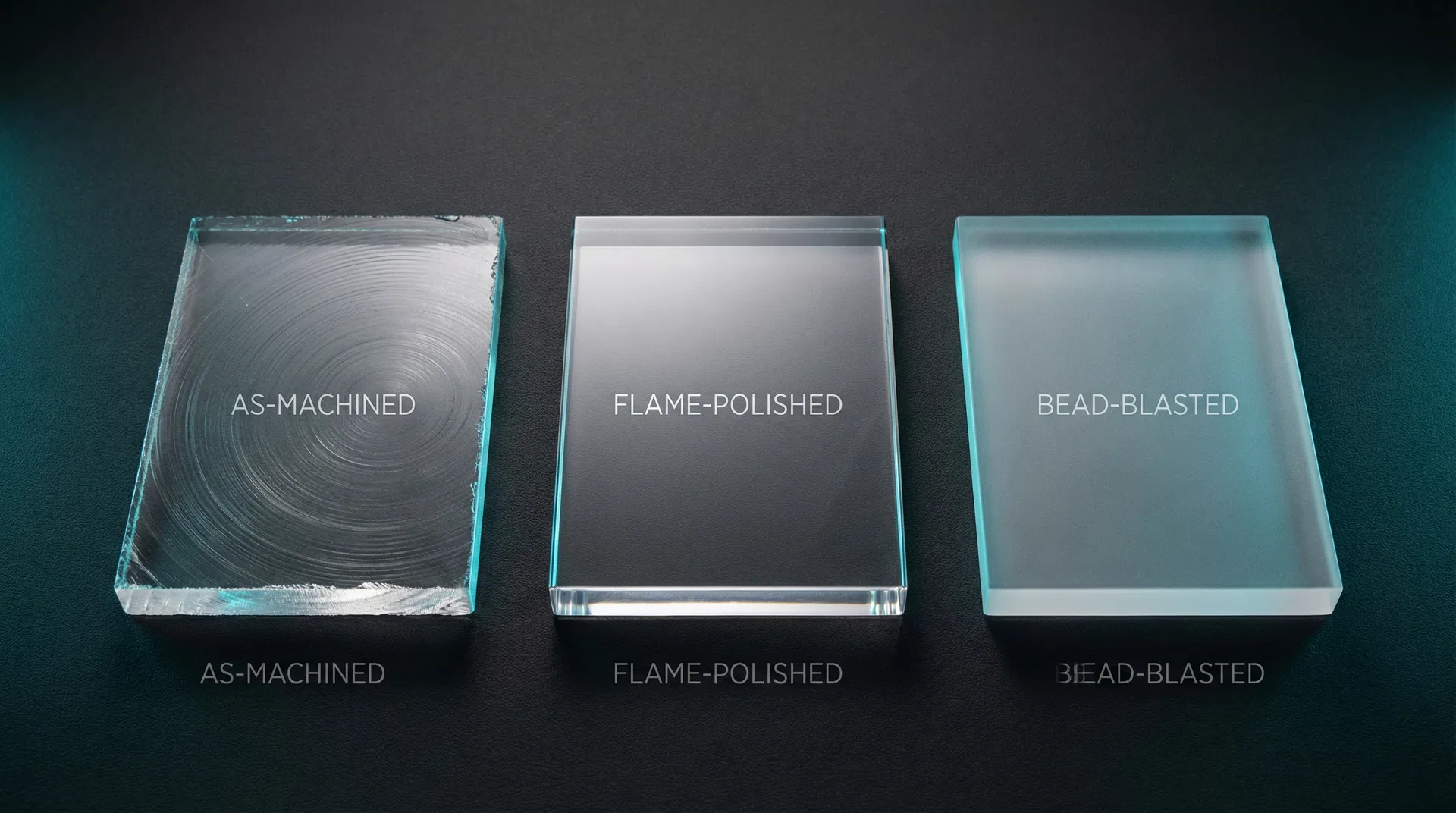
Acrylic surface finishes and post-processing
The finish should match the functional and visual role of the part. Optical-style components need a different workflow from machine guards or frosted display panels.
As Machined
Visible tool paths; suitable for hidden or non-cosmetic features.
Manual Polishing
Progressive finishing for controlled clear surfaces and edges.
Flame Polishing
Fast clear-edge treatment for suitable simple geometries.
Frosted / Matte
Uniform diffused appearance for anti-glare or decorative parts.
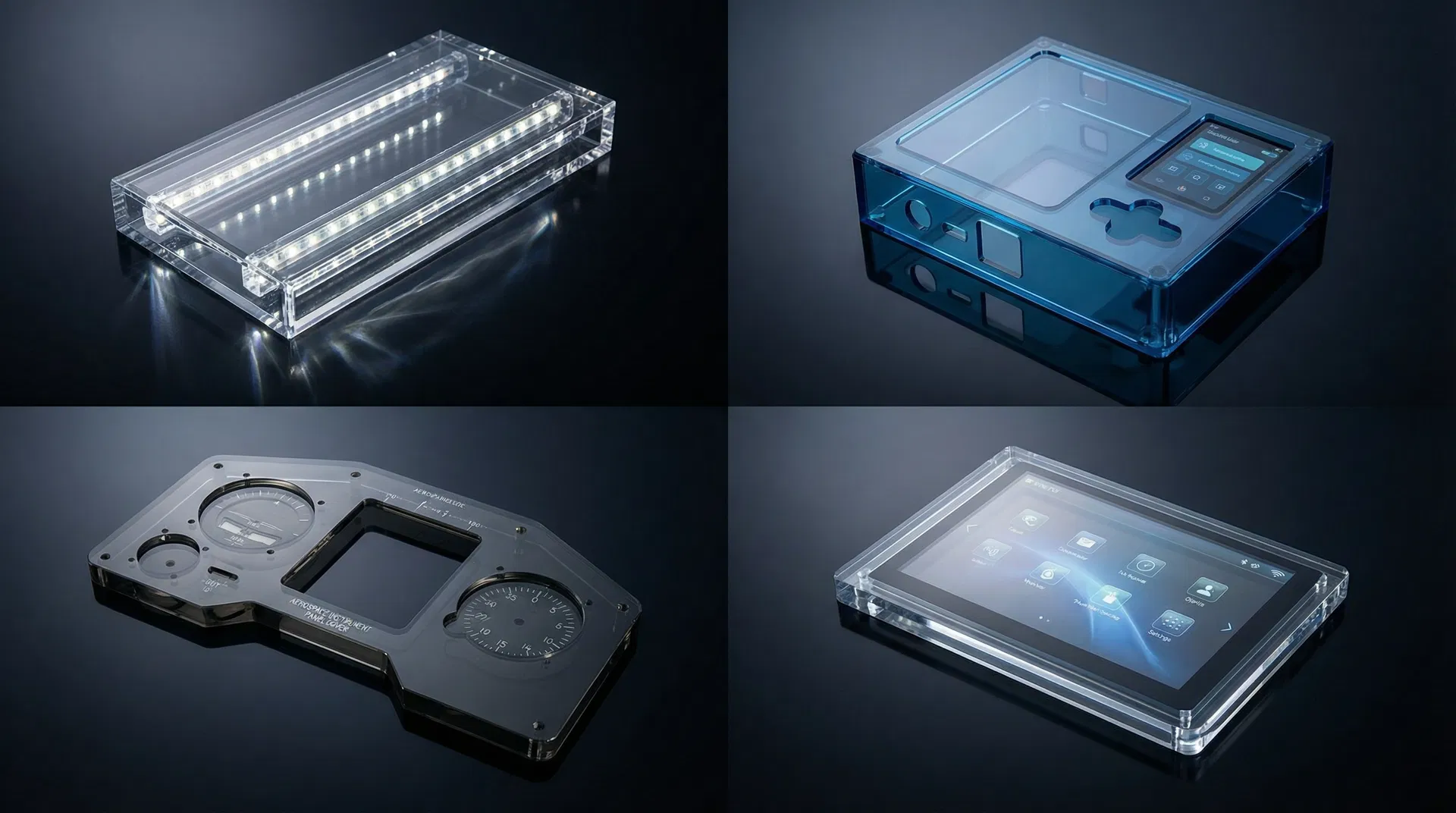
Applications for CNC machined acrylic parts
PMMA combines clarity, low weight, UV stability, and straightforward finishing for functional and presentation-focused components.
Optics & Lighting
Light guides, lenses, diffusers, inspection windows, and illuminated components.
Medical & Laboratory
Transparent housings, instrument covers, fluid-viewing parts, and test fixtures.
Automation
Machine guards, protective covers, sensor windows, and equipment panels.
Electronics
Display windows, bezels, housings, light pipes, and control-panel components.
Automotive & Aerospace
Interior light guides, instrument covers, prototypes, and lightweight transparent panels.
Retail & Architecture
Premium displays, signage, product stands, fixtures, and decorative panels.
From CAD file to finished acrylic parts
A clear workflow keeps material, tolerance, appearance, and inspection expectations aligned before production.
Acrylic CNC machining FAQs
What tolerances can you achieve on acrylic parts?
Standard acrylic CNC machining tolerance is typically ±0.05 mm. With specialized setup and tooling, suitable features can reach ±0.005 mm. Final capability depends on material type, stock thickness, geometry, heat control, surface requirements, datum scheme, and inspection plan.
What is the lead time for acrylic CNC machining?
Eligible acrylic projects can start from 3 business days, and many fast-turn projects are completed in 3–5 business days. The confirmed schedule depends on part complexity, quantity, acrylic grade, polishing or annealing, inspection requirements, material availability, and current production capacity.
Is cast or extruded acrylic better for CNC machining?
Cast acrylic is commonly preferred for precision and clear-finish parts because it generally machines more cleanly and carries less internal stress. Extruded acrylic can be appropriate for cost-sensitive panels and covers when heat and stress are carefully controlled.
Can acrylic parts be machined to a transparent finish?
Yes. The machining strategy, tool condition, finishing allowance, and polishing method all influence clarity. Specify which faces and edges need a clear or optical-style appearance.
What files should I send for a quote?
Send a 3D CAD file such as STEP, plus a PDF drawing showing critical tolerances, material grade, finish, quantity, and inspection notes.
How do you reduce cracking and melting during machining?
Key controls include sharp carbide tooling, appropriate chip load, effective chip evacuation, supportive workholding, controlled finishing passes, and stress review when required.
Can you make both prototypes and production quantities?
Yes. The process can support one-off development parts, low-volume builds, and repeat production. The most efficient setup depends on geometry, stock form, tolerance, finish, and order quantity.
Can acrylic components include metal threads?
For repeated assembly, threaded inserts are usually more durable than threads cut directly into acrylic. Share the fastener and assembly requirements during DFM review.
Ready to quote your acrylic CNC parts?
Upload your CAD files and drawing. Include the PMMA grade, quantity, critical dimensions, cosmetic surfaces, and required finish for a focused engineering review.
Explore our broader CNC machining services or contact the engineering team.